
Banning Directory Collections and Years
The verified Banning directory holdings are best described as telephone-directory reels rather than a complete Polk run. The table separates what is confirmed from what remains a finding-aid gap.
| Collection | Years | Where held | Access |
|---|---|---|---|
| Banning white and yellow pages reel | January 1938 to December 1949 | Library of Congress U.S. Telephone Directory Collection | Free images, OCR, PDF, structured files, IIIF |
| Banning white and yellow pages reel | December 1950 to January 1959 | Library of Congress U.S. Telephone Directory Collection | Free images, OCR, PDF, structured files, IIIF |
| Federal population census | Through 1950 currently public | National Archives and partner libraries | Name schedules and household context |
| California city and county directories | Varies by publisher and year | California State Library California History Section | Catalog and reference request |
| Reverse or criss-cross directory run | Not verified for Banning | Library holdings inquiry needed | Do not assume a local run exists |
| Sanborn map sheets | Banning edition not confirmed | Library of Congress or licensed databases | Verify place name and edition |
The two Library of Congress reels contain 362 and 637 images or files respectively. Catalog ranges do not guarantee a separate issue for every month or year, so the reel title frame and issue divider should be inspected before assigning a date. The California State Library can point to directories, newspapers, maps, manuscripts, and vertical files, but a catalog entry is not proof that every Banning volume is on an open shelf.
Inside the Banning Directory Reels
Each Banning telephone reel is a digitized directory object. The Library of Congress record offers page images, OCR, complete PDF or structured downloads, and IIIF. The 1950s item is marked digitized and unrestricted. A researcher can choose a frame, download an issue, or use OCR as a rough index before checking the original page image.
White pages are the most direct personal-name source. A typical listing uses surname, given name or initial, street address, and exchange or number. Yellow pages group businesses by category and can add a business name, address, telephone, and advertisement. Typography changes from issue to issue. An initial may be the only given-name clue, and an address may be abbreviated or split across columns.
The 1938 to 1949 object is available at the Library of Congress Banning telephone directory record. The later reel is cataloged as Banning directories from 1950 to 1959. A direct reel image view shows how an issue page is presented. All three routes are stronger when the issue title, page number, and image are saved with the transcription.
Search Banning Directory OCR Then Inspect
OCR makes the Banning reels practical, but it is not the final reading. Start with a surname and spelling variants. Try initials, compound surnames, and an address fragment. Open the page image when OCR drops a letter, joins two columns, or mistakes a street number. Record the exact line, issue, page, exchange, and any abbreviation that affects meaning.
- Choose the reel and find the target issue or divider frame.
- Search OCR for the surname, then repeat with a likely variant or initial.
- Read the scanned page from the alphabetical column, not only the OCR snippet.
- Copy the address and telephone information exactly, retaining uncertain characters in notes.
- Compare the same name in nearby issues before treating an appearance or disappearance as a move.
A subscriber may be a household head, a business, a relative, or an organization. The Banning reel provides a dated association. Deeds, census schedules, obituaries, and court or vital records are needed for a stronger identity match.
How a Banning Directory Listing Reads
The Banning reels do not establish the full set of fields common to a Polk directory. Read what is visible and do not add an occupation, spouse, or ownership mark merely because another directory often printed one.
| Surname and given name | The alphabetical listing as printed, including initials or a spouse or business designation when present. |
|---|---|
| Street address | The listed service address, with abbreviations and directionals preserved. |
| Exchange and number | The telephone connection shown for that issue. |
| Yellow-page category | A business classification, business name, address, telephone, or advertisement where printed. |
| Occupancy mark | Not established for the verified Banning telephone reels; do not infer it. |
- Telephone directory
- A subscriber and business listing organized for telephone service, not a complete resident roll.
- Householder index
- An index designed to identify a household head. No verified Banning householder index was found.
- Criss-cross directory
- An address-first directory section that can turn a street into names. A Banning run was not confirmed.
- Abbreviation key
- The issue’s guide to shortened street, exchange, or service terms. Photograph or save it before interpreting entries.
This distinction matters for family history. A white-page listing can support a person-at-address clue. It cannot show every adult, determine occupancy, or replace the recorder’s legal description.
Pair a Banning Directory Reel With Census
The first Banning reel and the 1940 census overlap in a useful way. Search the telephone issue for a surname, then use the nearest census schedule to test household composition, relationship, age, and geography. The census can place several people together; the phone book can supply a street number or telephone clue. Neither source should be forced to answer what it does not record.
- Transcribe the 1938 to 1949 listing with issue date, page, address, and telephone details.
- Search the 1940 census by the name and the San Gorgonio Pass location, checking nearby enumeration areas when street names vary.
- Compare the household names and relationship fields with the phone listing, allowing for initials and spelling changes.
- Use a deed, newspaper notice, obituary, or marriage record to test an identity that remains uncertain.
The National Archives releases federal population schedules under a 72-year framework. A census line is a household snapshot for an enumeration date. A directory line is a subscription snapshot for an issue. Their difference is the reason pairing them works.
The census access route is the National Archives census research page.
Pair the Banning 1950s Directory Reel
The second Banning telephone reel runs from December 1950 through January 1959. The 1950 census provides a second household anchor, while newspapers, deeds, probate notices, and city records can explain the years between issues. Search the same surname across both reels, but also search an old street name and likely initials when the family changed its listing style.
A first appearance brackets a possible arrival or telephone installation. A last appearance only shows that the listing stopped. It may reflect a move, death, a new number, an unlisted subscription, or a changed business entry. A recorded deed can show a title transfer without showing who occupied the property. A newspaper notice can add a relationship or event date, but it should be checked against the named source.
The 1950s reel can be opened through the Library of Congress catalog record. Save the item identifier, issue frame, and page image with the research log.
Search the Banning Directory Archive by Date
The City Archive Center is a different Banning directory route. It is not a resident list, but its keyword, category, and date-range search can surface council participants, planning applicants, commissioners, project parties, and addresses around a civic event. Categories include council and redevelopment agendas or minutes, planning notices, community plans, specific plans, environmental files, master plans, newsletters, finance, parks, and water or wastewater.
The visible fields are Keywords, an Archive category dropdown, a Time Period choice for the last week, month, six months, or year, and start and end dates in mm/dd/yyyy format. Search a person’s name with an address or project term. Keep the record’s public role clear. A speaker or applicant is not thereby a private household member.
The archive search is available through the City of Banning Archive Center.
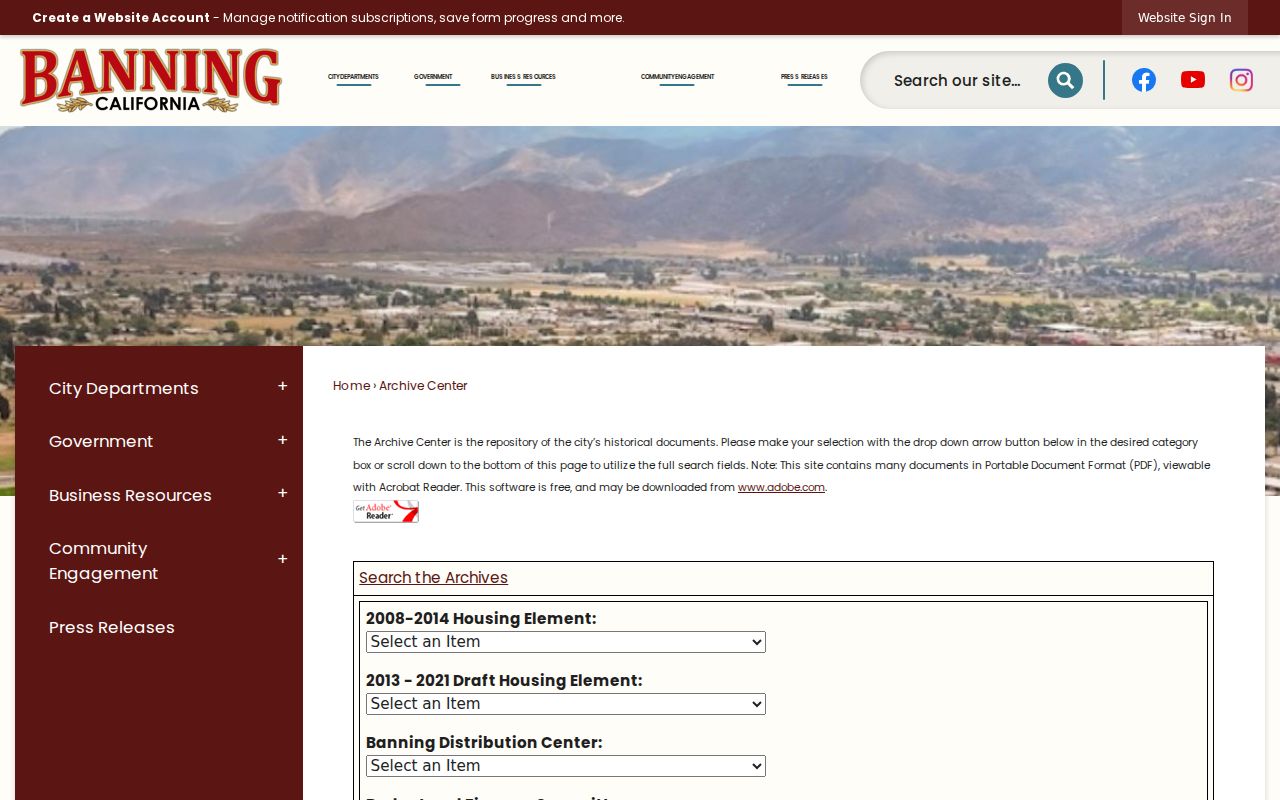
Archive results add local context around a name or address. They should be cited by category, date, and document rather than described as a citywide directory.
Local History Help for Banning Directories
When a Banning directory question reaches beyond the digitized reels, the city’s Local History Resources page gives concrete referral points. The San Gorgonio Pass Historical Society is listed at P.O. Box 331, Beaumont, CA 92223, with 714-313-6064. Gilman Historic Ranch and Wagon Museum is listed at 1937 W. Gilman Street, Banning, with 951-922-9200. Malki Museum is listed at 11795 Fields Road, Banning, with 951-849-7289.
Ask whether a collection holds surname files, photographs, obituary clippings, school annuals, phone books, cemetery transcriptions, or research services. Those questions are useful leads, not proof that each item is open or complete. The California State Library California History Section is another route for directories, newspapers, maps, manuscripts, and genealogy sources.
The city referral list is at Banning Local History Resources.
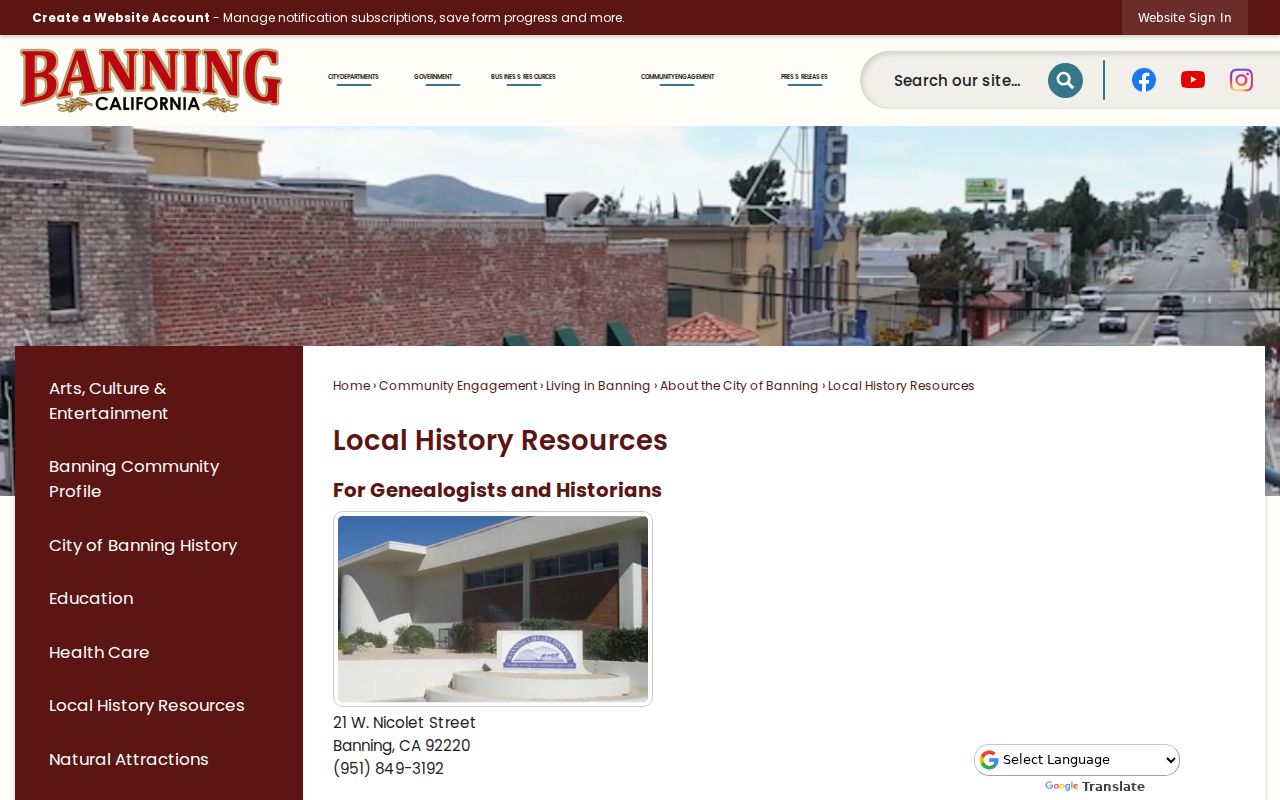
Local history contacts can fill a gap that an online index cannot, especially when a catalog uses San Gorgonio Pass, Rancho San Gorgonio, or a predecessor-county label.
California Collections Expand Banning Directory Searches
The California State Library’s California History Section is a statewide shelf with local value. It can point to city and county directories, newspapers, maps, photographs, manuscript catalogs, and vertical files. Search terms should include Banning, San Gorgonio Pass, Beaumont, Cabazon, Rancho San Gorgonio, and predecessor counties when the record predates Riverside County’s creation in 1893.
Sanborn maps are a separate building-history source. The Library of Congress collection is useful for checking whether a Banning sheet and edition exists, but the research sweep did not confirm a Banning-specific sheet. Do not cite a generic Sanborn collection page as if it proves a local map was made.
Use the California History Section collection page to ask for a catalog or reference route.
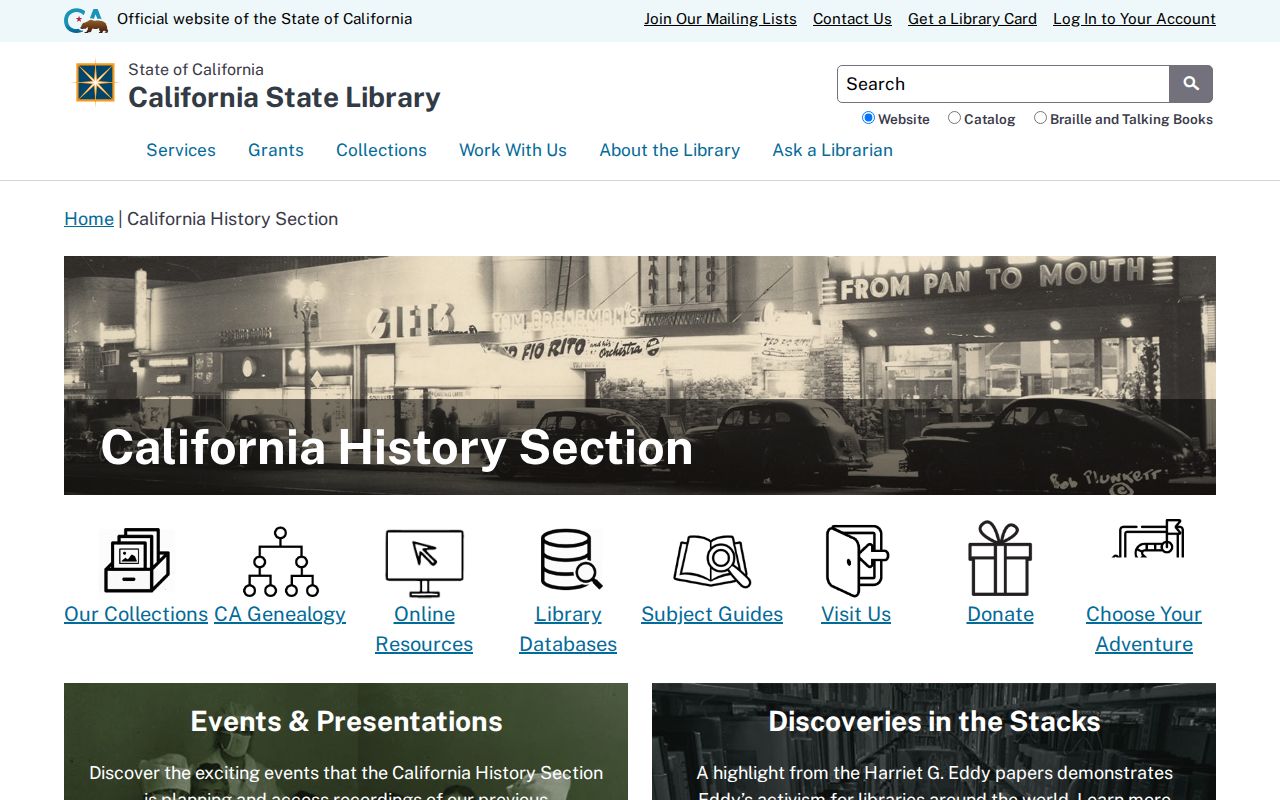
A reference request should state the county, place label, surname, record type, and date range. That gives staff a way to distinguish a Banning entry from a broader pass or county record.
History Changes Banning Directory Search Terms
Banning’s record history begins before the city was incorporated. Riverside County was created in 1893, and Banning incorporated in 1913. Earlier land, court, church, and federal records can therefore sit under predecessor counties or Rancho San Gorgonio labels. The city’s history connects recorded land interest to Dr. Isaac Smith in 1853, the Gilman 1854 adobe, the rail and pass route, and the older stage and transport economy.
Those details are practical catalog terms. A newspaper title may use Banning, San Gorgonio Pass, or a successor publication. A family file may be indexed under a settlement or ranch name. The city history also notes a mastodon fossil reported in the Banning Daily Record in 1965, a small clue that dated local newspapers can hold unexpected search leads.
History does not turn every old reference into a resident record. It helps place the source in the right jurisdiction and time.
What a Banning Directory Cannot Prove
A Banning directory entry proves that a name or business was listed in a particular issue. It does not prove ownership, every person at an address, continuous residence, or a current connection. A missing name is not proof of death or departure. OCR is a finding aid, not an authoritative transcription. A catalog range is not proof that every issue survived.
Research note. Keep the issue, page image, exact line, source URL, and date with every directory lead. Then confirm important identity claims through a custodian record.
For a current address chain, use the Banning street directory. For one person, use the Banning resident lookup. For a former household, combine the directory collection with deeds, census, probate, and newspaper evidence.