
Sources for Banning's Previous Residents
A house-history search needs sources that cover different eras and roles. The era table keeps title, household, project, and historical evidence from being treated as the same thing.
| Source | Years it covers | Where held | What it shows |
|---|---|---|---|
| Recorder online index | January 1, 1974 to present | Riverside ACR Self-Service | Grantor, grantee, document type, number, date |
| Clerk document index | January 1, 1893 to present | Riverside ACR | Clerk filings and related recorded documents |
| Banning telephone reels | 1938 to 1949; 1950 to 1959 | Library of Congress | Listed subscriber, address, telephone, business listings |
| Federal census | 1850 to 1950 where schedules apply | National Archives and partners | Household names, relationships, location |
| City permits and planning | Published activity series 1981 to 2021; file cutoff unverified | Banning Community Development | Applicant, project, owner authorization, alteration dates |
| Probate, obituary, and newspaper | Varies by issue and case | Court, library, archives, newspaper collections | Death, heirs, relationships, notices |
The online recorder split is central. Clerk documents reach back to 1893, while recorder documents begin online in 1974. Earlier deed books are an office, archive, FamilySearch, or library problem. A previous residents search should say when it crosses that cutoff.
Begin with Riverside Official Records Self-Service.
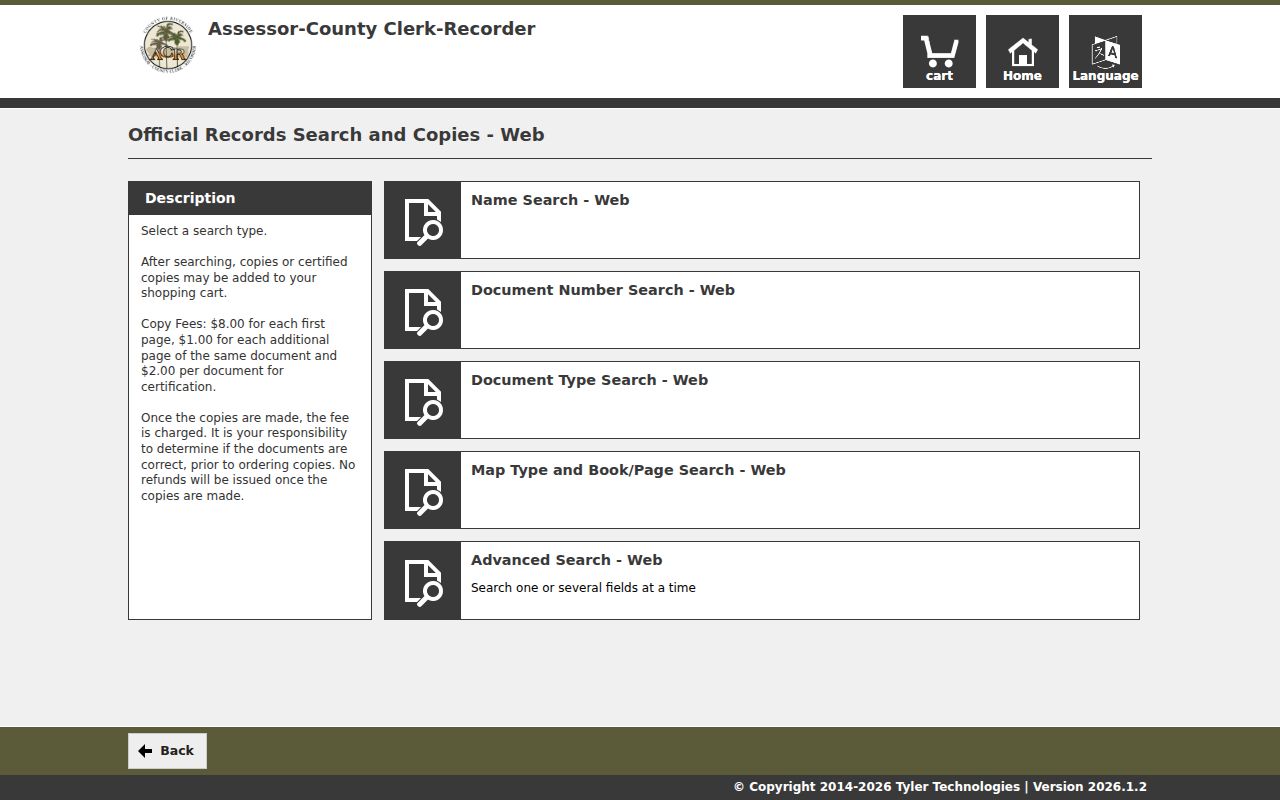
The official-records route supplies the instrument search that anchors a Banning address history.
Start Banning Previous-Resident History With the APN
Names are unstable. Parcels are a better starting key. Search the current address in the Riverside assessor interface, save the APN, legal description, current transfer clue, and any visible mailing field. Then compare the parcel on Map My County so the street, subdivision, jurisdiction, and neighboring lots are clear.
Banning SmartGov can help because its public parcel search accepts address, APN, or primary-owner display name. Some cards show “NO SITUS ADDRESS,” which makes APN and map browsing essential. The city display is an application or parcel dataset, not the legal assessment roll. Keep both values when they differ and verify with ACR.
- Save the current address exactly as displayed by the assessor and SmartGov.
- Record the APN, legal description, map clue, and current transfer information.
- Check Map My County for parcel shape, jurisdiction, and any neighboring or common-area polygons.
- Use the APN and legal description to test every later deed match.
The goal is a stable land key. It is not a claim that the current owner is the only person who has occupied the address.
Read a Banning Previous-Resident Deed
After the parcel is identified, search the current owner in the recorder index as a grantee around the acquisition date. A grantee receives an interest. The deed also names a grantor, who transfers it. Read the instrument number, recording date, document type, execution date, vesting, legal description, and party roles. Confirm the APN or legal description before moving backward.
- Grantor
- The party transferring an interest in the recorded instrument.
- Grantee
- The party receiving an interest in the recorded instrument.
- Chain of title
- A sequence of recorded transfers used to trace an interest backward.
- Legal description
- The recorded land description that controls identity more reliably than a street label.
The deed image may contain the legal description, vesting, signatures, and return address. The index is a pointer. It does not tell you who occupied the parcel or whether a listed party lived in Banning.
Trace Banning Previous Residents Through Sellers
Once the current purchase deed identifies a seller, search that seller as a grantee in an earlier period. Repeat the pattern: grantee to prior deed, read the grantor, check the land description, then move to the earlier date. Riverside’s advanced search permits exact and wildcard modes, sounds-like and fuzzy operators, date windows, document types, and legal-description alternatives. Start narrow so each new name can be explained.
Online recorder coverage begins January 1, 1974. A deed before that date may require Riverside Gateway research, office books, microfilm, or a catalog and library route. The recorder’s copy guidance describes ordinary office-computer searching back to 1975 while the web portal states 1974. Use the web date for web coverage and ask Gateway about the transition year.
Online copies cost $8 for the first page, $1 for each additional page of the same document, and $2 for certification per document. Mail requests should give complete parties, document type, estimated recording date, and APN. For pre-1976 requests the office limits a search to two years after the estimated year.
Banning Previous Residents Before 1974
Riverside Gateway at 2724 Gateway Drive, Riverside, is the named route for older pre-1974 recorder research. The office is listed as open 8:00 a.m. to 5:00 p.m. The nearer Hemet general-service office at 880 N. State Street, Suite B-6, offers recorder and clerk copies, marriage and vital services, and assessor map or form help, with service hours listed as 8:00 a.m. to 4:30 p.m.
Bring the current APN, the known party, an estimated year, the document type, and the prior deed clue. Mail requests go to Riverside County Clerk-Recorder, Attn: Certified Section, P.O. Box 751, Riverside, CA 92502-0751. A not-to-exceed check can help when a fee is uncertain. The office says approximate mail time is one to two weeks and does not accept cash by mail.
Use the live advanced recorder and clerk search before deciding that an address trail ends. A web miss may be a coverage miss, not a historical absence.
Banning Past Residents in Phone Books
The Library of Congress Banning telephone reels bridge a period that the online deed index cannot describe as a household story. The first reel covers January 1938 through December 1949. The second covers December 1950 through January 1959. White pages can show a listed subscriber, address, exchange, and number. Yellow pages can show a business or service address.
Search the surname, initials, street, and spelling variants. Inspect the scan after OCR. A first appearance can bracket a possible arrival or telephone service. A disappearance can mean a move, death, an unlisted number, or a changed listing. A phone line proves a subscription or association for that issue, not every person at the address.
The digitized collection details are on the Banning city directory collections page, including issue navigation and census pairing.
Banning Previous Residents in Census Schedules
Pair the nearest directory issue with the 1940 or 1950 federal census when the geography fits. Census schedules can identify people in a household, relationships, ages, and an enumeration location. A phone page supplies a street or subscriber clue. The two sources answer different questions, so disagreement is a prompt to check spelling, enumeration area, a move, or a separate person.
- Transcribe the phone listing with reel, issue, page, address, and number.
- Search the closest census year using Banning, San Gorgonio Pass, and nearby catalog labels.
- Compare household relationships and street clues without treating the issue date as a census date.
- Use a deed, obituary, probate notice, or newspaper to test the identity.
National Archives census access follows a 72-year release framework. Earlier geography may use San Bernardino or San Diego predecessor-county terms because Riverside County was created in 1893.
Open the National Archives census research route.
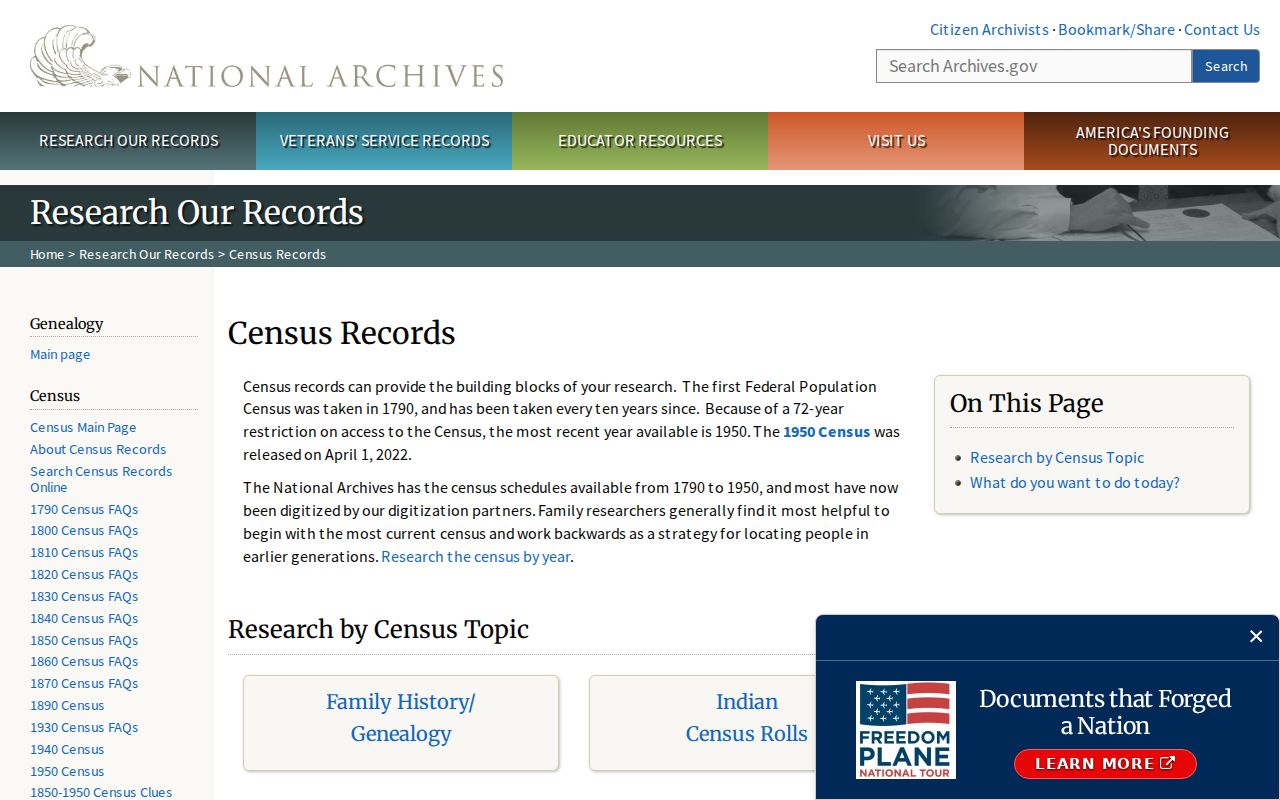
Census context can show a household composition that an owner record never captures.
Banning Previous Residents Through Permits
Banning permit and planning files can place an addition, alteration, or project at a parcel. SmartGov public application notes may show the APN, responsible owner or applicant, contractor, scope, and date. Historical permit-file coverage is not officially published as a complete cutoff, although city statistics show permit activity from 1981 through 2021. Treat the statistics as broad context, not a parcel file.
Search released files in Laserfiche or NextRequest, or file a narrow CPRA request naming the address or APN and a limited date span. A code case may show notices, correspondence, and final disposition. It can identify a project role without proving that the named person lived at the address.
City history helps explain why a record may use a railroad, pass, or older settlement term. The official history route is City of Banning History.
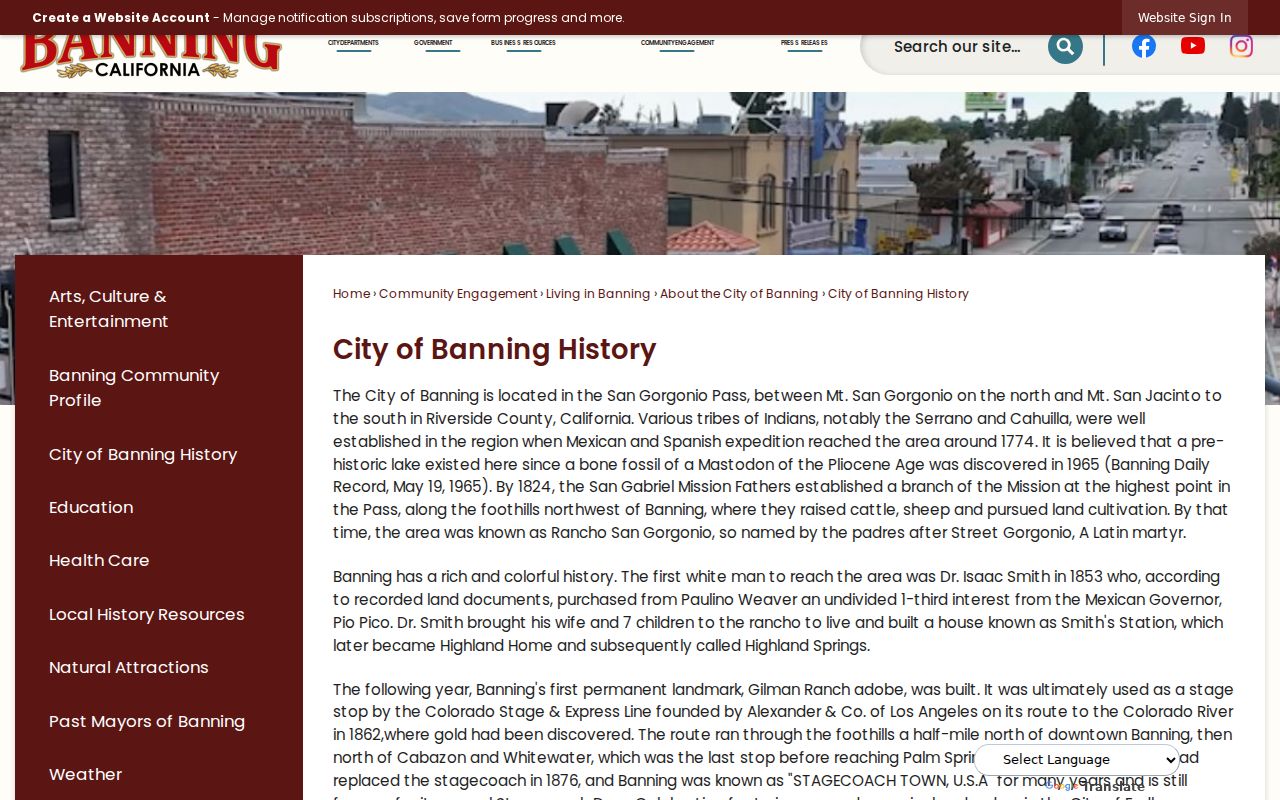
A dated city-history source can supply search vocabulary, but the parcel file and recorded instrument remain the evidence for a specific address.
Banning Previous-Resident Address Changes
Address continuity is the main trap in a previous residents search. Banning developed around the Southern Pacific corridor, Ramsey Street, the pass, and later subdivisions. A postal Banning label may differ from city jurisdiction. Street naming, subdivision labels, annexation, and a changed number can make a modern search miss an older entry even when the land is the same.
Compare the legal description, plat or recorded map, assessor map, council ordinances, directories, and historic maps. The research did not locate an official citywide street-renumbering year. That gap must remain a gap. Do not borrow a renumbering date from another California city.
Search Banning and San Gorgonio Pass together, then test each older name against the parcel’s legal description. A stable land key is more reliable than a familiar street label.
Most Banning property history is a California and Riverside County matter, but a federal civil case, bankruptcy, or district filing can appear at the edge of the trail. The Central District of California uses PACER for party and case searches. Save the case number, party role, filing date, and district. A federal party is not an occupant without a separate property or household source.
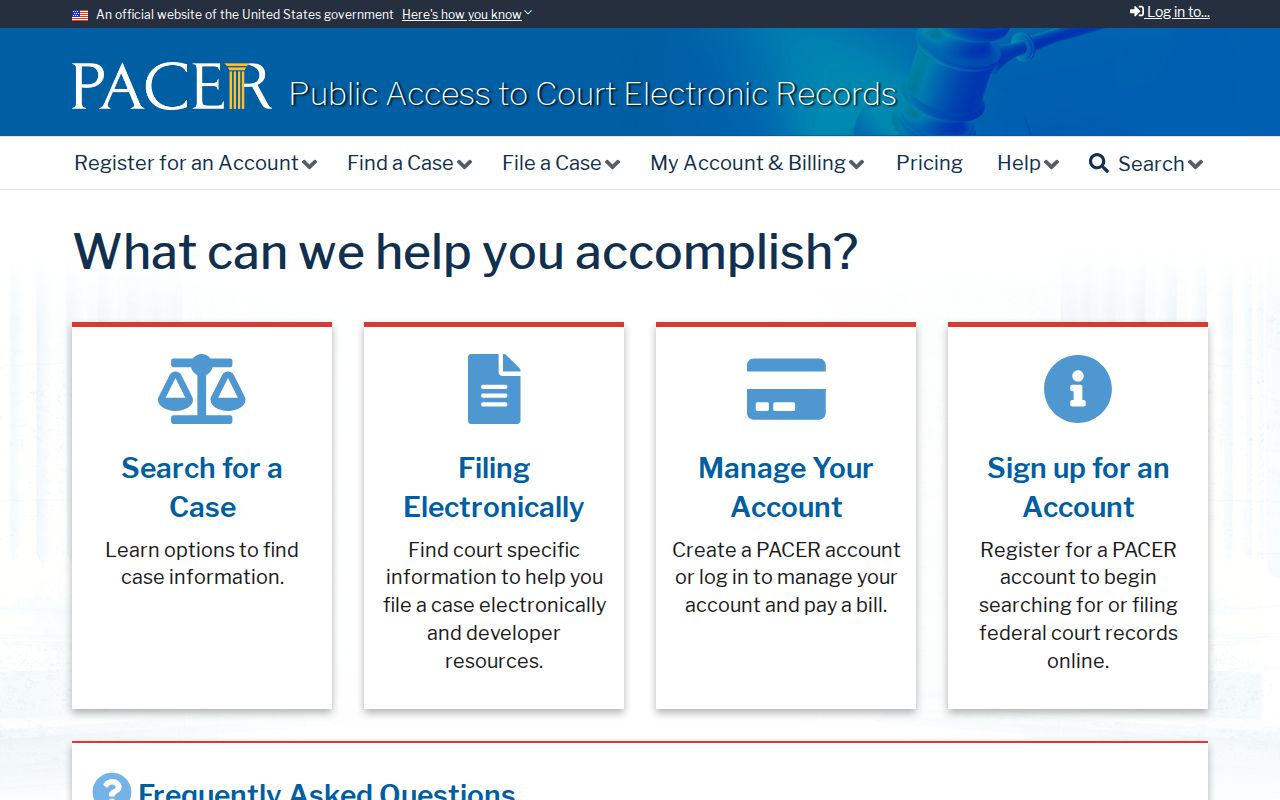
PACER adds a distinct record layer when a local address trail intersects federal court, while the state and county keep the title chain.
Banning Previous Residents and Sanborn Maps
Sanborn fire-insurance maps can show building footprints, uses, materials, and street context when a place and edition exist. The Library of Congress Sanborn collection is the correct place to check, but the research sweep did not confirm a Banning-specific sheet. A collection landing page is not evidence that a Banning sheet was made.
Use a Sanborn hit beside permits, legal descriptions, city maps, and photographs. If the map does not exist for the address or time, say so and use the available sources. Missing map coverage does not erase a house history.
Check the Library of Congress Sanborn map collection for a verified place and edition.
Past Banning Households: Directories and Obituaries
Owners are only one part of previous residents. Directory listings and census schedules can show a household layer, while newspapers, obituaries, probate petitions, and marriage notices can explain a transition. Use the Banning city directory collections for the issue itself, then connect a name to the deed chain or a dated notice.
Probate can name heirs, petitioners, and property descriptions. An obituary can name relatives and a last locality. Neither is a complete occupancy record. A person may appear because of an estate, a business, or a family connection without living at the address.
House-history rule. Treat each former-resident name as a sourced lead. Preserve the date, record role, address form, and reason the source connects the person to the parcel.
Limits on a Banning Previous Residents Search
A previous residents search cannot recover every occupant. Deeds track title. Phone books track listed service. Census schedules capture an enumeration snapshot. Permits track project roles. Obituaries and probate track life or estate events. A no-result can reflect an unindexed year, an unlisted number, a changed street label, a protected record, or a missing collection.
Lawful personal research. Use Banning address history for family history, restoration, genealogy, and personal property research. Do not use a past-resident lead to stalk, harass, threaten, or harm a living person.
For current parcels, the Banning street directory owns the present address chain. For one person, use the resident lookup. For a former household, keep the full backward trail with its coverage gaps visible.