
Finding Banning Residents in Records
Banning is an incorporated Riverside County city in the San Gorgonio Pass, so a resident search crosses city, county, court, library, and state systems. The right first move depends on the clue. An address belongs with Riverside Assessor property search and Map My County. A recorded transfer belongs with the Riverside Assessor-County Clerk-Recorder, where a person is indexed as grantor or grantee. A court connection belongs with the Riverside Superior Court portal. An older household may appear in a Banning telephone reel, census schedule, newspaper, or obituary instead.
These records do not all make the same claim. An assessor parcel describes property and may show an owner or mailing route. A voter result concerns a person’s own registration status and is protected by a permitted-use rule. A phone listing shows a subscriber for one issue, not every adult in a home. Searchers who keep those distinctions clear are less likely to join two people with the same name or mistake an owner for an occupant.
- Write down the known name, street, parcel clue, date range, and spelling variants.
- Start with Banning SmartGov for an address, APN, or primary-owner display name, then verify the parcel with Riverside ACR.
- Use the Riverside recorder index for a party search, deed, lien, easement, or related clerk document.
- Check the Riverside court index, official license and business searches, or a lawful personal voter-status route when the question is about one person.
- For a past household, pair the Library of Congress Banning telephone reels with census, newspaper, probate, and deed evidence.
When a city file is identifiable but not online, a narrow California Public Records Act request is more useful than a request for a complete resident list. Give the custodian an address or APN, a record series, and a limited date span.
The Banning Offices Behind Resident Records
The Banning records trail has four main desks. City Hall holds municipal documents, permits, planning files, and city requests. Riverside ACR separates assessment data from recorded instruments and clerk records. The Registrar of Voters controls registration access. The Superior Court controls case indexes and copies at the county level, with a local Justice Center in Banning. Each office can answer a narrower question than a general people search, which is why the keeper matters.
Riverside ACR
880 N. State St., Suite B-6
Hemet, CA 92543-1496
951-486-7000
Riverside Registrar of Voters
2720 Gateway Drive
Riverside, CA 92507
951-486-7200
Banning Justice Center
311 E. Ramsey Street
Banning, CA 92220
Countywide portal
The city custodian details are listed by the Banning City Clerk.
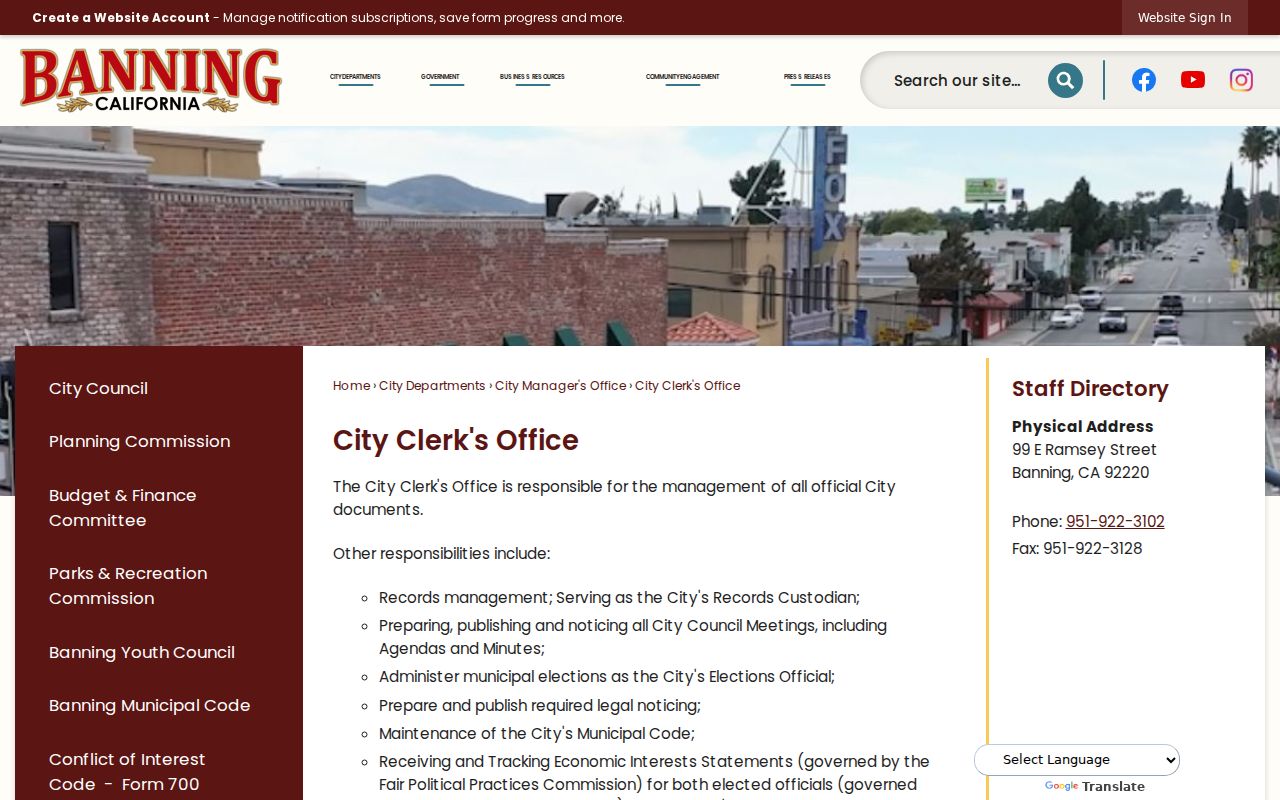
The City Clerk route is the right starting point for municipal records, while deeds and county certificates belong with Riverside ACR.
Riverside ACR’s general service office in Hemet handles recorder and clerk copies, marriage and vital services, and assessor map or form help. Older pre-1974 recorder research belongs at Riverside Gateway in Riverside. Banning City Clerk records requests can begin with the city’s Laserfiche library or NextRequest archive. Court access is countywide even when the case was filed or heard at the Banning Justice Center.
Why Banning SmartGov Starts an Address Search
Banning’s SmartGov parcel search is a local exception to Riverside’s owner-name suppression on the standard public assessor form. Its single search field accepts a parcel number, street address, or owner name. The owner mode uses starts-with behavior and returns paginated cards. Each card can show an APN in the format used by the city system, a situs address, city and ZIP+4, a primary-owner display name, and a link to parcel detail or public application notes.
| Parcel number | Searches the city parcel identifier and leads to the parcel card. |
|---|---|
| Address | Uses the situs or street field; some results read “NO SITUS ADDRESS.” |
| Owner name | Matches the displayed primary-owner field with starts-with behavior. |
| Result card | May show APN, situs, city, ZIP+4, primary-owner display name, and public notes. |
The display name comes from a city application or parcel dataset. It is a useful bridge from an address to a possible name, not the legal assessment roll. Confirm ownership, vesting, and the instrument number through Riverside County Property Search and the recorder index before treating the match as a property fact.
The Banning NextRequest archive is a second local lead. The research sweep found more than 4,000 prior requests visible in its archive, with Search, Make Request, and sign-in controls. A released permit or planning file may connect a parcel to an applicant, project date, contractor, or scope, but it is not a household roll.
The city’s public request system is shown at the Banning NextRequest source used for the directory research.
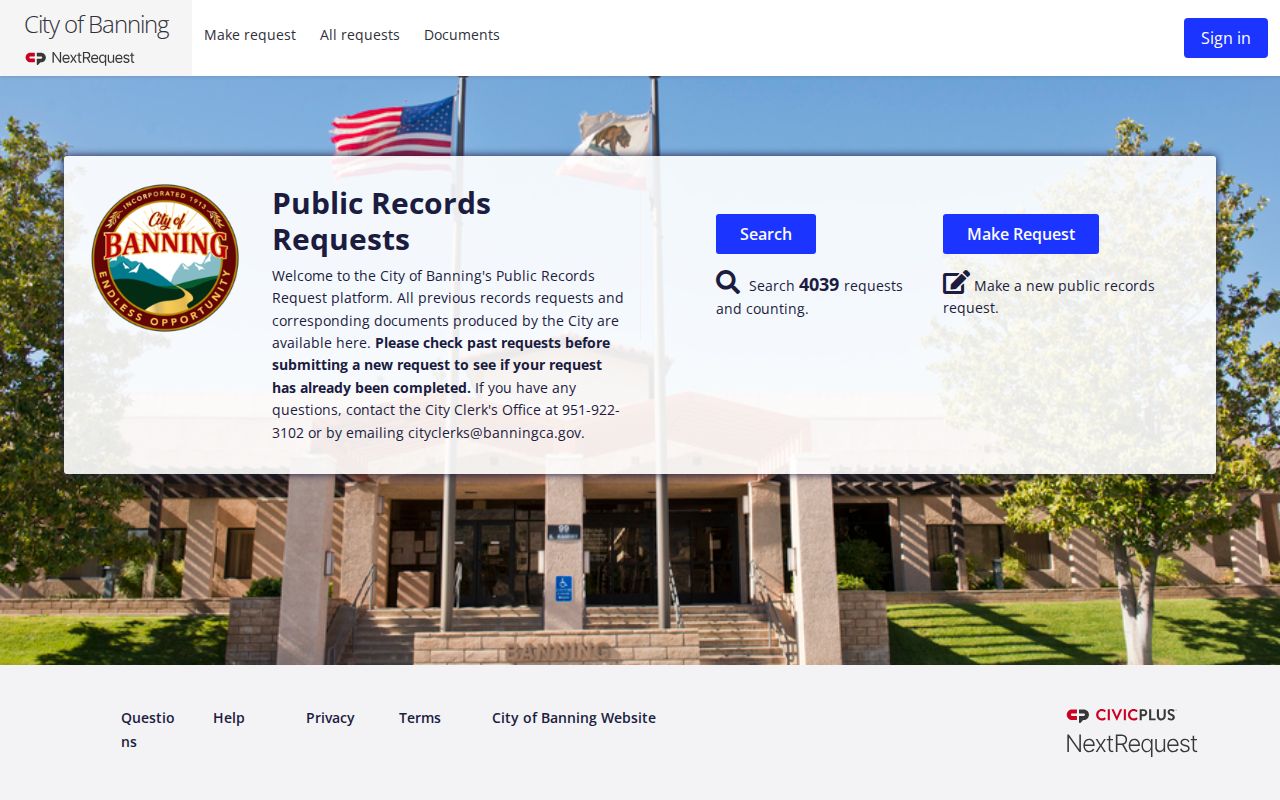
That portal is most useful when a parcel clue needs a city document. A request that names the address or APN, record type, and date span gives the clerk a workable search rather than asking for an undefined resident list.
Using the Banning Property Search Correctly
Riverside’s public assessor search is built for APN, PIN, and property-address queries. It does not offer a public owner-name box. For a street start, enter the number and street name. For an assessment or PIN route, use the first nine digits without the dash and check digit. A parcel result can include situs, APN or PIN, legal description, values, transfers or sales, and map or permit links.
- APN
- Assessment parcel number used to locate the county property record.
- PIN
- Enter the first nine digits only, leaving out the dash and check digit.
- Property address
- Use a street number and street name, such as 123 Main.
- Owner name
- No public owner-name field appears on the standard county web form.
A situs address describes the land or improvement. A mailing address is where tax correspondence goes. A different mailing address may reflect an owner who is elsewhere, a mailing preference, or an organization. It does not identify every person at the parcel. Public service office terminals and microfiche are the county fallback when the web form is too narrow.
The Riverside ACR assessor services page describes maps, public terminals, property information, transfer reports, and bulk data. Use the current office route for a roll question, and use the recorder for the deed image.
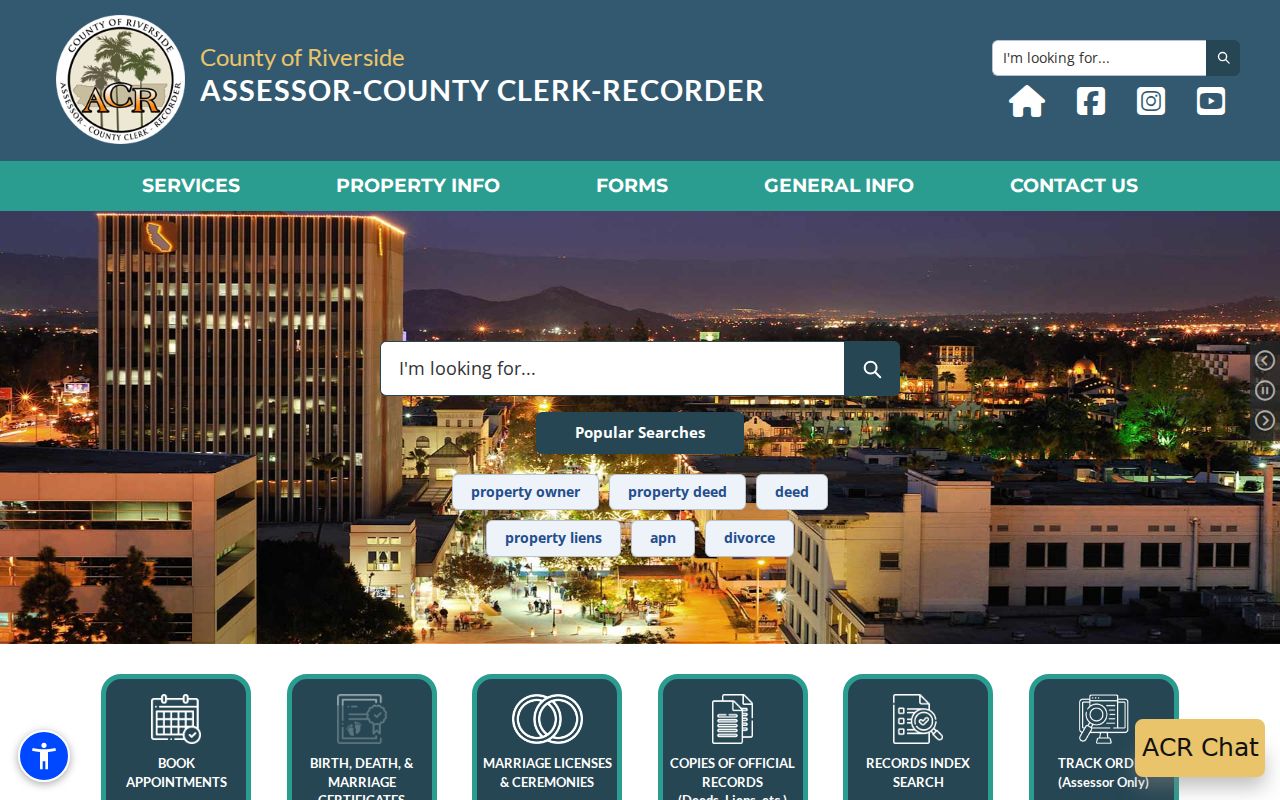
The county assessor view helps turn a Banning street into parcel numbers. It should be read beside the city GIS layer and the recorded document, not as a complete account of household membership.
Tax-bill and payment questions use the separate Riverside Treasurer-Tax Collector portal.
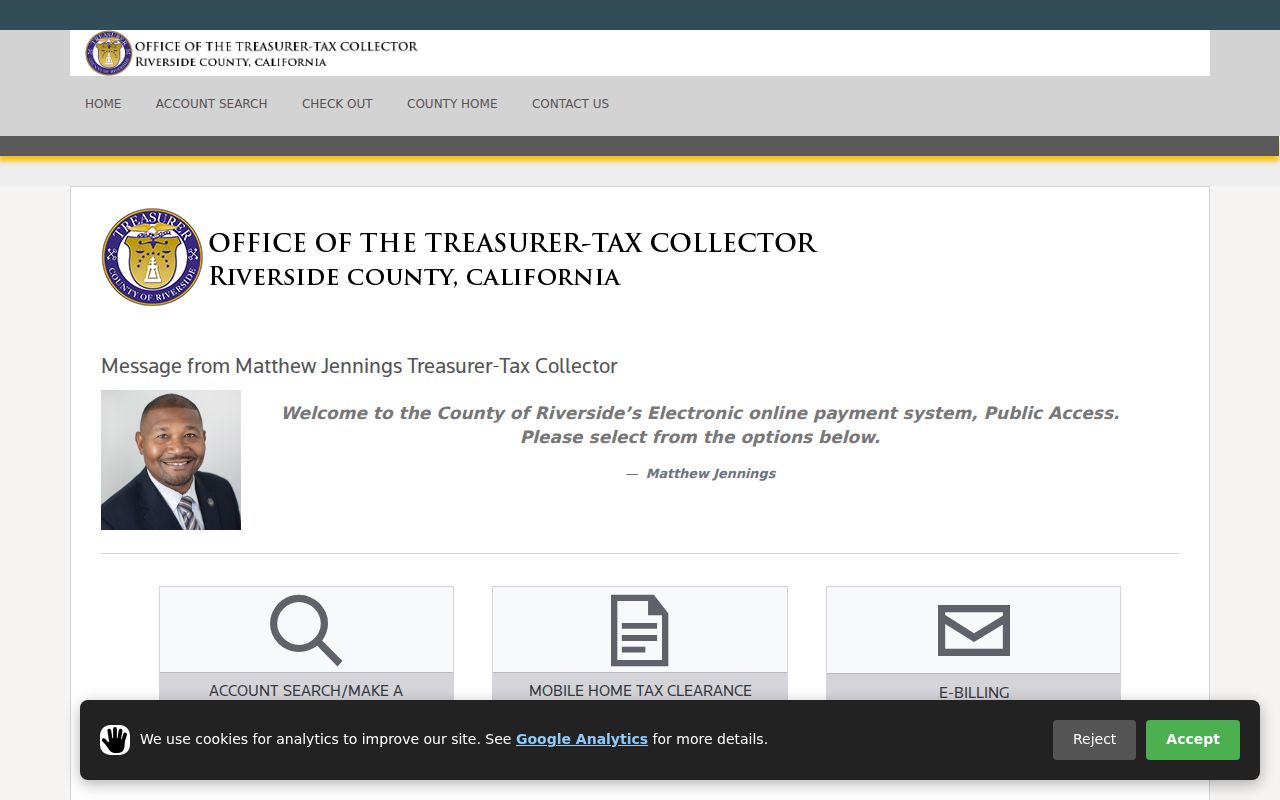
The tax portal can identify a bill or assessment route, but it is not a resident directory and should not be used as one.
Current Banning Resident Directory Sources
Current sources behave like partial directories. They list a role, a record event, or an institutional connection. The source column below tells you what a result can support, while the access column keeps the limits visible.
| Source | Who or What It Lists | Keeper | Access |
|---|---|---|---|
| SmartGov parcel search | Parcel and primary-owner display name | City of Banning | Free public search |
| Assessor property search | Parcel, assessment, situs, and map data | Riverside ACR | Free APN or address route |
| Recorder index | Grantors, grantees, document roles | Riverside ACR | Free index, paid copies |
| Voter status and file routes | A person’s registration status or approved extract | Riverside Registrar | Authenticated or permitted use |
| City staff directory | Public employees and office contacts | City of Banning | Free online |
| License and business indexes | Public professional or entity affiliation | California agencies | Free search, detail varies |
A name search is strongest when two independent roles agree. For example, a recorder party may lead to a legal description, while a license or business filing supplies a different public address. A voter record is not a casual street browser. For one-person evidence, follow the dedicated Banning resident lookup workflow.
The Banning Recorder's Online Date Break
Riverside’s online coverage has a useful archival split. Clerk documents are indexed from January 1, 1893, while recorder documents begin January 1, 1974. The web cutoff is not the beginning of land history. It marks the point at which the online recorder index becomes dependable for a web search. Earlier deed books require an office, archive, FamilySearch or library route.
The Self-Service landing page offers Name Search, Document Number Search, Document Type Search, Map Type and Book/Page Search, plus Advanced Search. Names use Last First MI. Exact Match and Wildcard modes can be loosened one at a time. The index is free. An ordered copy costs $8 for the first page and $1 for each later page of the same document, with $2 for certification per document. The portal warns that copy orders are not refundable once made.
Online orders can be mailed after payment, while an in-office order uses the SST order number. The office describes average processing at about 48 hours for online copies. Mail requests go to the Certified Section at P.O. Box 751, Riverside, CA 92502-0751, and should include the document type, parties, estimated date, and APN when the number is unknown. A web index result is an index clue. The image supplies the legal description, signatures, and return address, with protected material redacted as required.
The county routing and records distinction can be checked through the Riverside public and official records page.
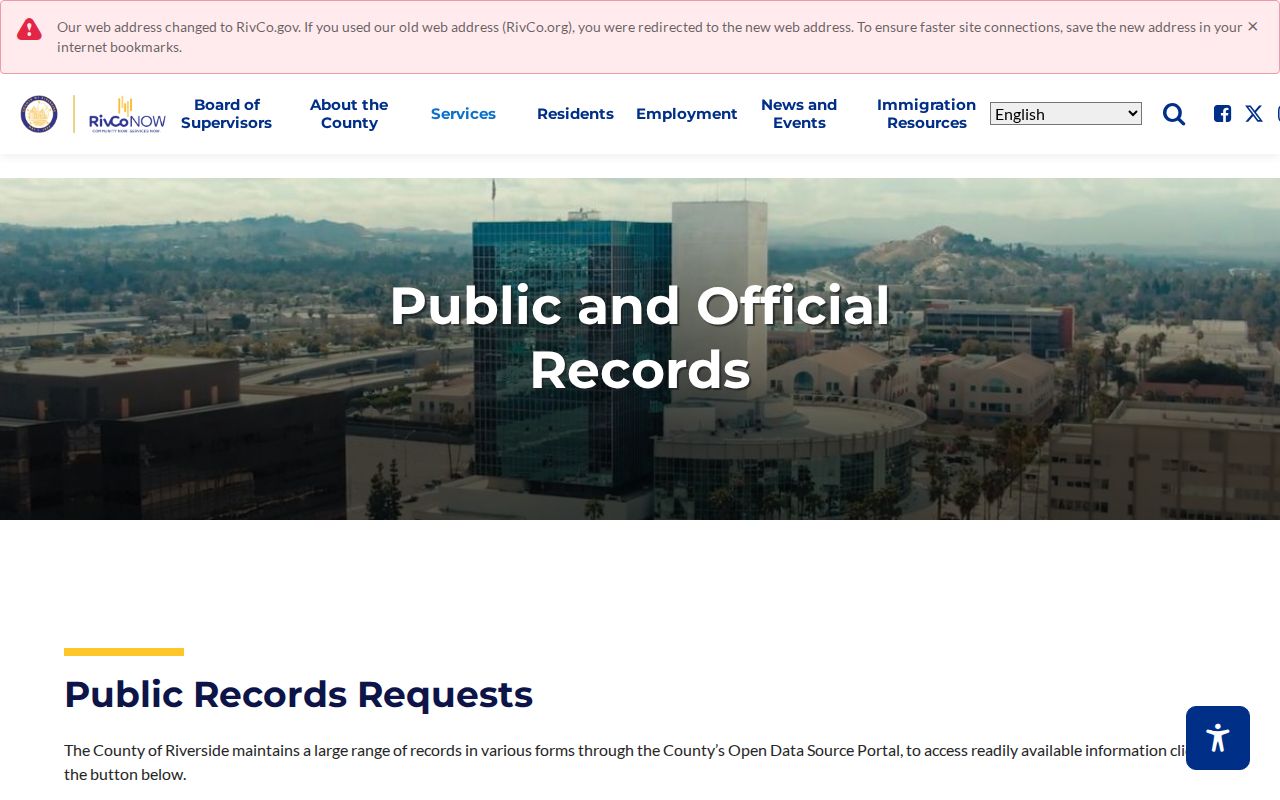
That routing page helps separate assessor, recorder, clerk, court, and vital-record questions before a request is sent to the wrong desk.
Banning Court Name Search Needs Context
The Riverside Superior Court Public Portal covers civil, probate, family, criminal, and traffic information subject to access rules. An account is required. A known case-number search is free. A civil or criminal/traffic name search uses paid credits, and one credit can open up to ten cases. Accessible documents cost $1 per page for the first five pages and $0.50 per later page, capped at $50 per document. The portal limits use to 30 searches or case lookups in five minutes.
- Criminal and traffic name index
- Banning coverage begins November 1996. Save the case number and party role.
- Family law
- Almost all cases from April 1992. Save the case number and filing date.
- Probate
- Almost all cases from July 1994. Save the case number and register entries.
- Older or nonindexed matter
- Use a clerk search or RI-MC002 fallback with names, case type, and date range.
The practical move is to buy a name search only long enough to identify the correct case, then return by case number. Sealed, confidential, and juvenile matters may be absent online. Riverside also stopped allowing third-party DOB or driver-license narrowing for criminal and traffic searches on October 11, 2024. A result needs a case type, date, and party-role check before it becomes part of a Banning resident lookup.
Banning Vital Records Follow Copy Rules
Birth, death, and marriage certificates are not an open name database. Riverside University Health System handles current and immediately preceding-year county births and deaths, Riverside ACR supplies older county events, and California Department of Public Health is the statewide channel. The right form depends on the record and the copy type.
- Birth or death
- RUHS handles recent events, ACR older events, and CDPH offers the statewide route. Informational copies are public; authorized copies require eligibility and a sworn statement.
- Public marriage
- Use Riverside ACR or CDPH for the license county and current informational-copy route.
- Confidential marriage
- Use the county that issued the license. A party or court order is required; there is no ordinary public copy route.
- Divorce certificate
- CDPH covers the 1962 to June 1984 certificate route, while the court keeps the decree. The certificate is not the judgment or its terms.
An informational certified copy is available to the public but is marked not valid to establish identity. An authorized copy can establish identity, but the applicant must fit a statutory category and generally provide a sworn statement. Confidential marriage records are narrower still. Event dates, names, city or county, parents’ birth surnames, relationship, signature, payment, and a notary block may all be required.
Banning Voter Records Are Purpose Limited
California’s registration-status tool is for a voter checking their own record. The live form uses first name, last name, date of birth, and conditional identity matching with a California driver-license or state-ID number or the last four Social Security digits. A match can return registration status, party preference, county, districts, voting location, vote-center information, and ballot preferences. It does not open every voter at an address.
Elections Code sections 2187 and 2194 define the index and limit use of voter-registration information to permitted political, governmental, scholarly, journalistic, and election purposes. Driver-license and signature data, Social Security information, and protected addresses are withheld. A full Riverside extract requires an applicant, purpose category, geographic scope, requested fields, recipients, storage plan, certification, and signature. A casual Banning street list is not an approved shortcut.
Use the California registration-status route for a personal check and the Riverside Registrar at 951-486-7200 for county instructions. Historical Great Registers held by archives or libraries are a separate historical source and should not be confused with the current authenticated lookup.
Focused Banning CPRA Requests Fill Gaps
California’s Public Records Act, Government Code section 7920.000 and following, lets any person ask for an existing, identifiable record without a special form or stated purpose in most cases. Banning generally determines within 10 days whether responsive disclosable records exist. Unusual circumstances allow a written extension of up to 14 more days under section 7922.535. The deadline is a determination, not a promise that a large file will arrive that day.
City records begin with the 24/7 Laserfiche library and the published-request archive in NextRequest. If email is not available, the paper request form goes to the City Clerk, P.O. Box 998, Banning, CA 92220-0998. Give the street address or APN, a document type, and a start and end period. The form asks for name, phone, email, address, preferred response method, a document description, signature, and date.
The city expressly does not hold deeds, easements, birth, marriage, or death records. Those belong with Riverside ACR. Fire and hazardous-material records may belong with CAL FIRE, gas records with SoCalGas, and some building records with Riverside Building & Safety. Routing is part of the search, not a clerical afterthought.
Laserfiche’s public records route is available through the Banning city records page.
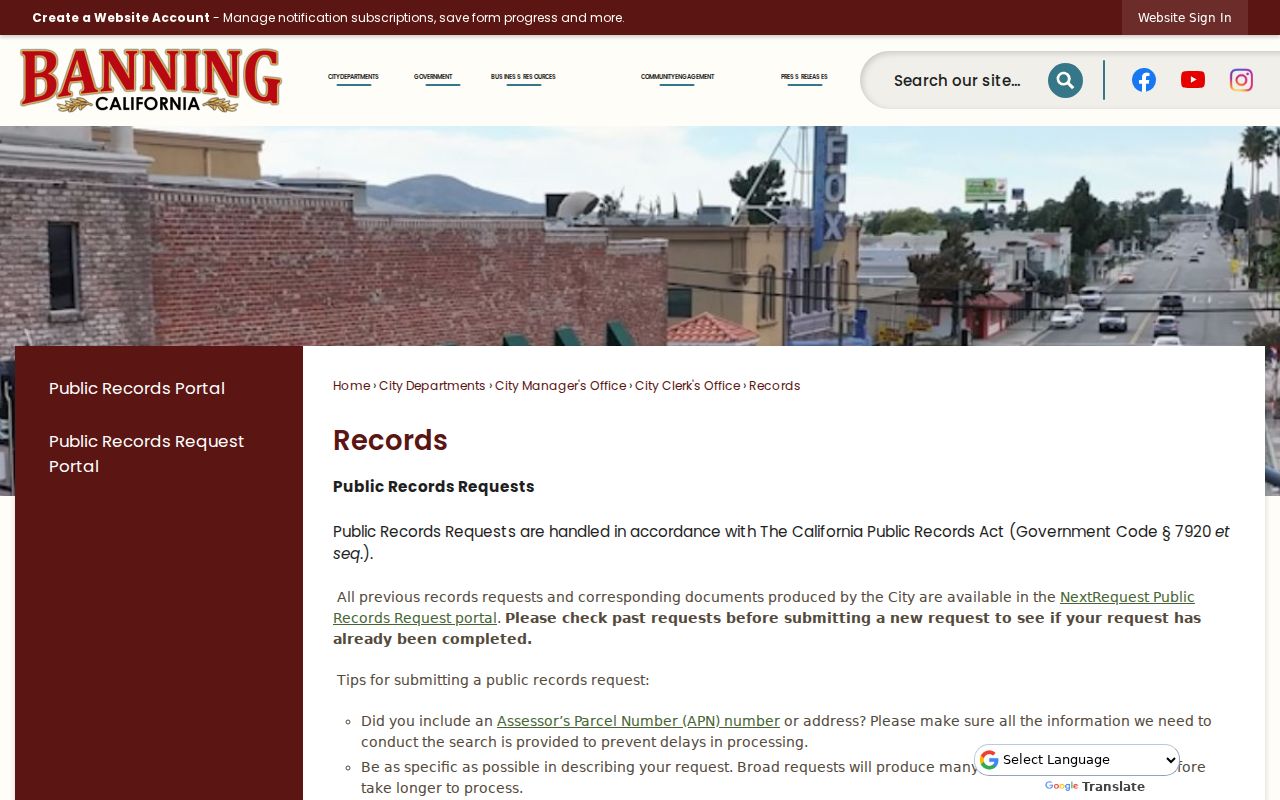
A targeted request can retrieve an existing permit register, planning file, council record, or map while preserving exemptions for complaint-source identities and protected personal data.
Banning Business, License, and Property Clues
When a resident lookup needs another identity anchor, public business and professional records can help without pretending to be residence proof. California Secretary of State bizfile searches an entity name or file number and can show status, formation date, jurisdiction, street and mailing addresses, agent, filing history, and managers or officers where published. The Department of Consumer Affairs search accepts board, license type, number, business name, first name, last name, city, and county, with status and discipline links that vary by board.
Riverside FBN filings can connect a sole proprietor or assumed business name to a filed address. The State Controller’s unclaimed-property search uses a surname or business name, first name, and location. A result may show an owner name, locality, reporting business, property type, and claim identifier. That is historical association evidence, not a current address or proof that a person lives in Banning.
Compare the exact name, entity number, license number, filing date, and public address across sources. A business relationship can explain why a name appears in a city permit or recorder document, while a professional license can distinguish two people with the same name.
Historical Banning Resident Directories
The strongest verified historical resident source is the Library of Congress telephone-directory collection. One Banning reel covers January 1938 through December 1949 and contains 362 images or files. A second covers December 1950 through January 1959 and contains 637. Both offer page images, OCR, complete PDF or structured downloads, and IIIF. They are telephone listings, not confirmed Polk-style city directories.
A typical white-page listing gives surname, given name or initial, a street address, and an exchange or telephone number. Yellow pages group businesses by category. Spouse or business designations may appear, but occupancy marks and occupation fields have not been verified for the Banning reels. Search OCR first, then inspect the image because columns and abbreviations can defeat text recognition.
The nearest census comparisons are 1940 and 1950, both public under the National Archives 72-year release framework. A phone listing can bracket a subscriber’s presence; disappearance can mean a move, death, an unlisted number, or a service change. Deeds and obituaries help separate those possibilities. Older work may also require San Gorgonio Pass, Rancho San Gorgonio, Beaumont, Cabazon, or predecessor-county catalog terms.
The Banning city directory collections page follows the historical shelf and reel workflow in detail.
Protecting a Banning Address From Misuse
California’s privacy rules affect both official records and commercial compilations. The Secretary of State Safe at Home program supplies an eligible participant with a substitute mailing address and protects the actual address within program rules. Researchers should never attempt to defeat that protection. Voter files have separate use limits, and recorded documents may qualify for redaction of unlawfully displayed Social Security numbers under Government Code section 27300 and following.
The California Privacy Protection Agency’s DROP platform sends a centralized deletion or opt-out direction to registered data brokers. It does not delete deeds, assessor records, court filings, or Banning city documents from their custodians. A source error must be corrected with the assessor, court, vital-record office, licensing board, Secretary of State, or other keeper that created the record.
Riverside ACR warned on March 25, 2026 about private letters seeking payment for property profiles or deed copies. The county does not require that third-party route. Confirm a document number and order through ACR at 951-955-6200. For suspicious consumer conduct, use the California Attorney General consumer complaint channel.
The statewide privacy announcement is documented at the California DROP announcement.
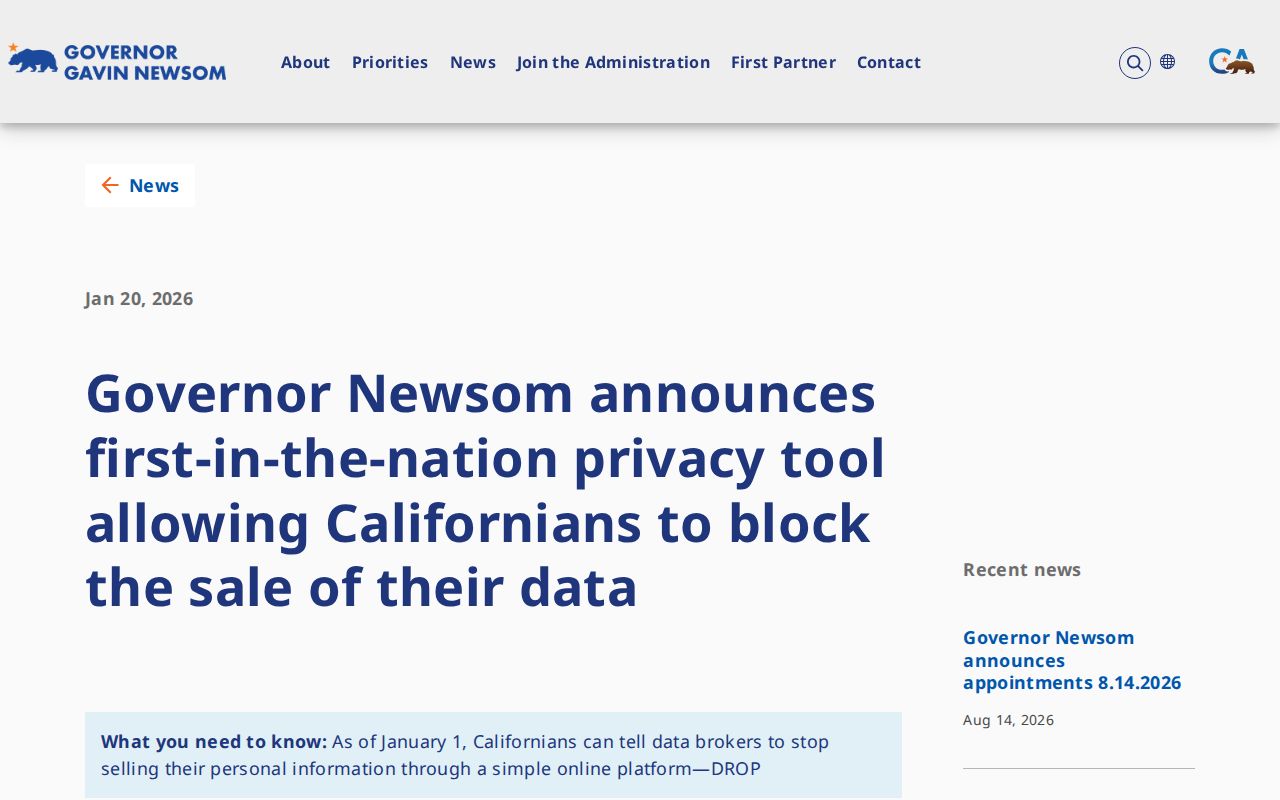
DROP is a data-broker direction, not an archive eraser. Keeping that line clear protects both privacy and the accuracy of public-record research.
California privacy rights and the source-record distinction are summarized by the California Attorney General CCPA guidance.
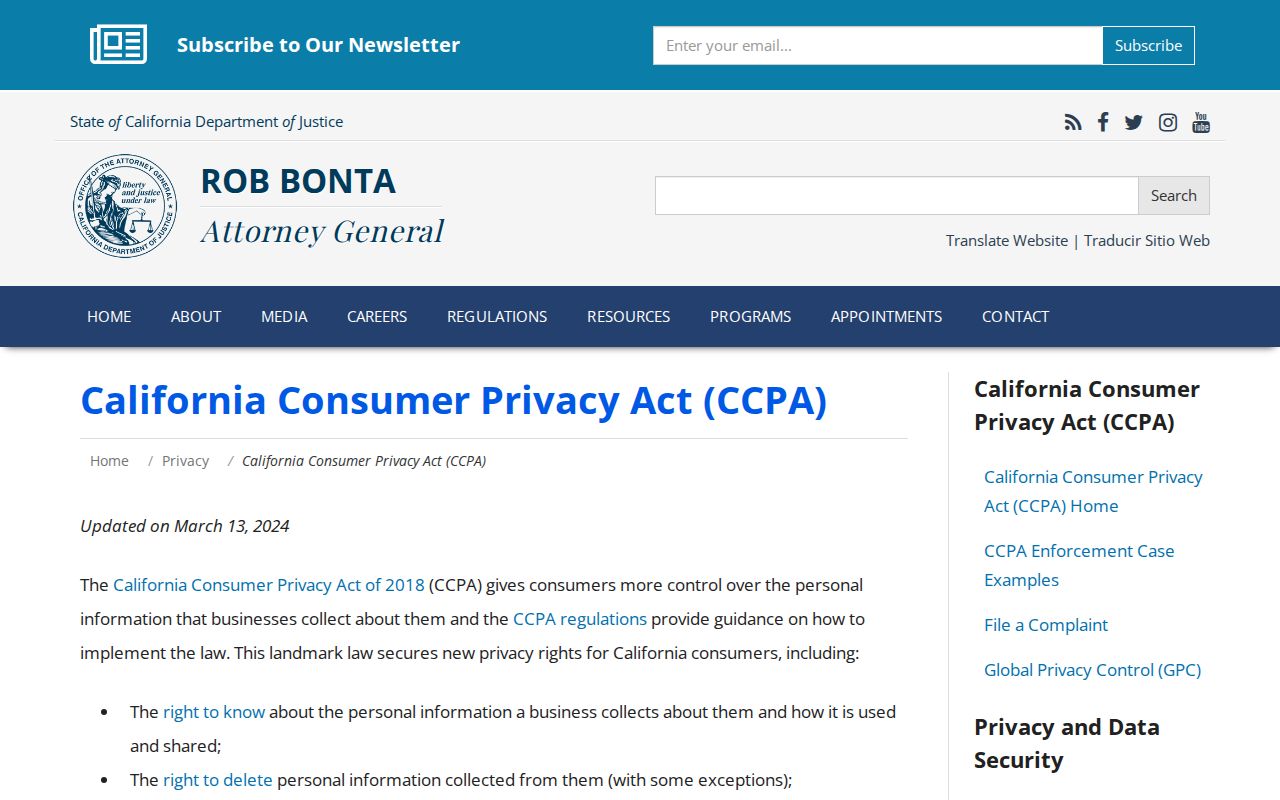
The guidance concerns covered businesses and personal-information rights; it does not rewrite a retained county deed or assessment record.
Suspicious commercial conduct can be reported through the California consumer complaint form.
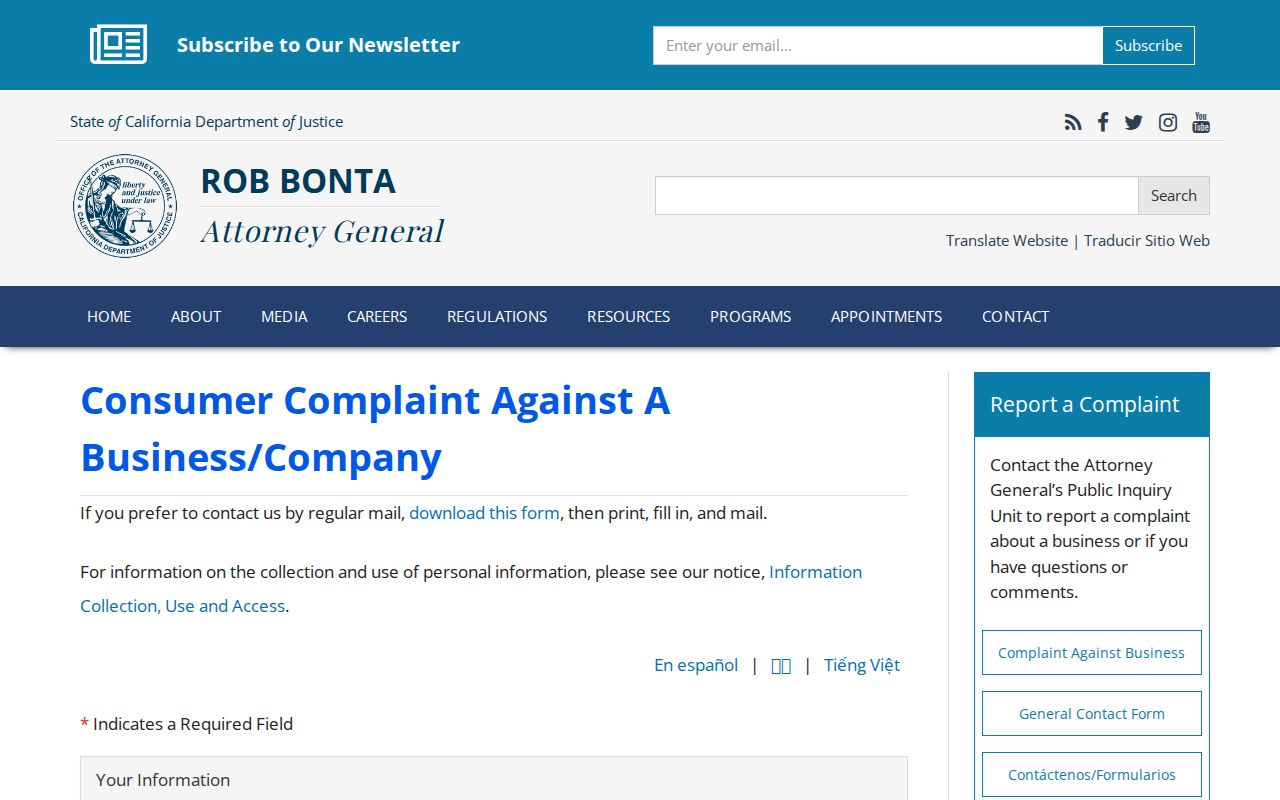
A complaint route is separate from correcting the underlying public record with its custodian.
Riverside’s property-record warning is available from the Assessor-County Clerk-Recorder notice.
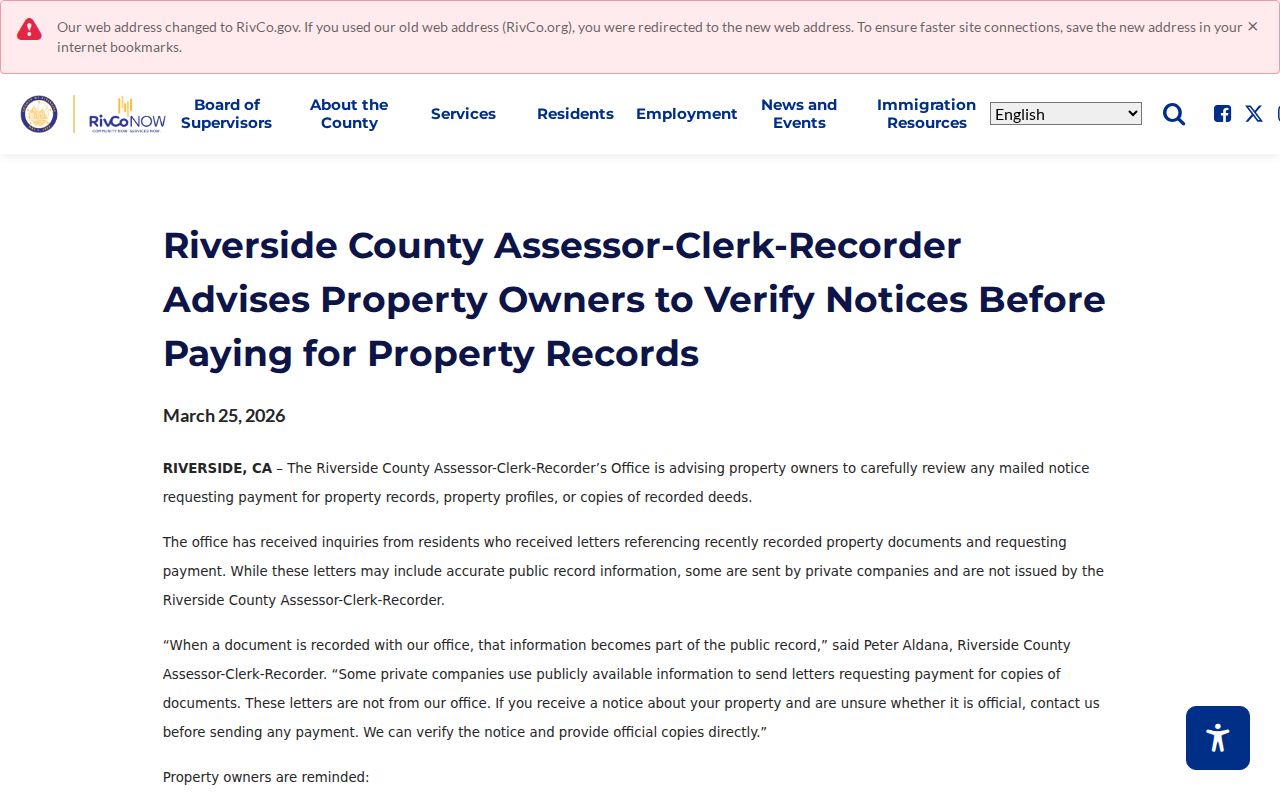
The notice is a timely reminder to order official copies through the county rather than paying an unsolicited private letter.
A Banning Resident Match Still Needs Proof
Use evidence in layers. A certified record tied to a unique number or legal description carries more weight than a directory lead. An official current index comes next. A phone book, newspaper, business filing, or unclaimed-property result is valuable for leads but does not establish current residence by itself.
- Roll
- A list kept for a defined purpose, such as assessment or voter registration, not a universal household list.
- Index
- A searchable pointer to a document or case. The underlying image or file may hold more detail.
- Parcel
- A mapped unit used by the assessor. It can contain land, structures, common areas, or no situs address.
- Grantor and grantee
- The grantor transfers an interest; the grantee receives it. The roles change as a deed chain moves backward.
| Official record trail | Directory or commercial clue |
|---|---|
| Shows a defined role, date, office, and record number | May merge names or preserve an old listing |
| Can be checked with the custodian | Needs a second source before identification |
| May be limited by law or eligibility | Does not override a protected-address rule |
Lawful personal research. Use Banning records for family history, property history, civic research, reconnecting, or another lawful personal purpose. Do not use a result to stalk, harass, threaten, or harm anyone.
Record the portal, spelling, date range, coverage cutoff, and negative searches in a research log. “No online result” means not found in that system and period. It does not prove that no record exists.