
What a Banning Resident Lookup Can Confirm
Each record below answers a different question. The strongest Banning resident lookup begins with the source that fits the clue, then uses a second source to test identity.
| Record | What it confirms | Where and coverage | Access |
|---|---|---|---|
| Assessor parcel | Parcel, ownership role, tax-mail route | Riverside address or APN search | Free; no public owner-name field |
| Recorded document | Named party, instrument type, transaction date | Recorder index from 1974 forward online | Free index; copies paid |
| Court index | Party, case number, type, filing date | Riverside public portal | Account; name search paid |
| Voter status | One voter’s registration and districts | California status route and Riverside | Identity inputs and use limits |
| Vital record | Event and named parties | Riverside or CDPH | Informational, authorized, or confidential rules |
| Business or license | Entity affiliation, public service address, status | California SOS or DCA | Free index; detail varies |
| Unclaimed property | Name and reporting association | State Controller search | Free search; claim proof required |
A property result does not establish occupancy. A court hit does not identify the right person until the case type and dates fit. A phone listing is historical evidence. The purpose of a Banning resident lookup is to make those distinctions visible.
Build a Banning Resident Identity Grid
Before searching, place the known facts in a small identity grid. Use the exact spelling from the source, including middle initials, compound surnames, and accents. Add a date range and a place clue. A common name needs more than one match. Do not use restricted birth dates, driver-license data, or similar identifiers as a casual shortcut.
- Name form
- Full name, surname-first version, initials, and known spelling variants.
- Geography
- Banning, San Gorgonio Pass, Riverside County, or a specific address or APN.
- Time window
- Event, deed, directory issue, filing, or court date range.
- Anchor clue
- Parcel, business, license, relative, case number, phone issue, or newspaper event.
- Record role
- Owner, grantor, grantee, applicant, party, subscriber, licensee, or entity officer.
The role is often the deciding fact. A grantee receives an interest in a deed. A grantor transfers it. A permit applicant may be a contractor or authorized representative. A phone subscriber may not be the person who occupied the address. Preserve the role in the research log rather than collapsing all names into “resident.”
Banning Resident Lookup Court Coverage
The Riverside Superior Court Public Portal is the main court path for Banning. It covers civil, probate, family, criminal, and traffic information subject to access rules. An account is required. Exact case-number searches are free. Civil and criminal or traffic name searches use paid credits, and the portal limits use to 30 searches or case lookups in five minutes.
| Court material | Published Banning or Riverside coverage | Search result |
|---|---|---|
| Felony and misdemeanor indexes | Banning begins November 1996 | Case number, type, party, filing date, register |
| Family law | Almost all cases from April 1992 | Case and filing information subject to access limits |
| Probate | Almost all cases from July 1994 | Case, register, and probate notes where accessible |
| Civil branches | Branch-specific dates from 1991 to 1994 | Party and case detail varies by branch |
Older or nonindexed cases require a clerk search. The RI-MC002 form supports mail or counter requests with requester contact fields, case or citation number, person-name rows, case type, start and end year, requested documents, certification choice, payment, and delivery information. Sealed, confidential, juvenile, and restricted material may not be available by mail.
Read the Riverside court public-access terms for current charges, limits, and document rules.
The mail and counter fallback is the RI-MC002 court records search and copy form. The court’s policy notice also explains the criminal and traffic name-search change in its Riverside name and case search FAQ.
Federal matters are separate. Riverside County falls in the Central District of California, and federal party searching uses PACER.
The federal route is shown at Central District of California court.
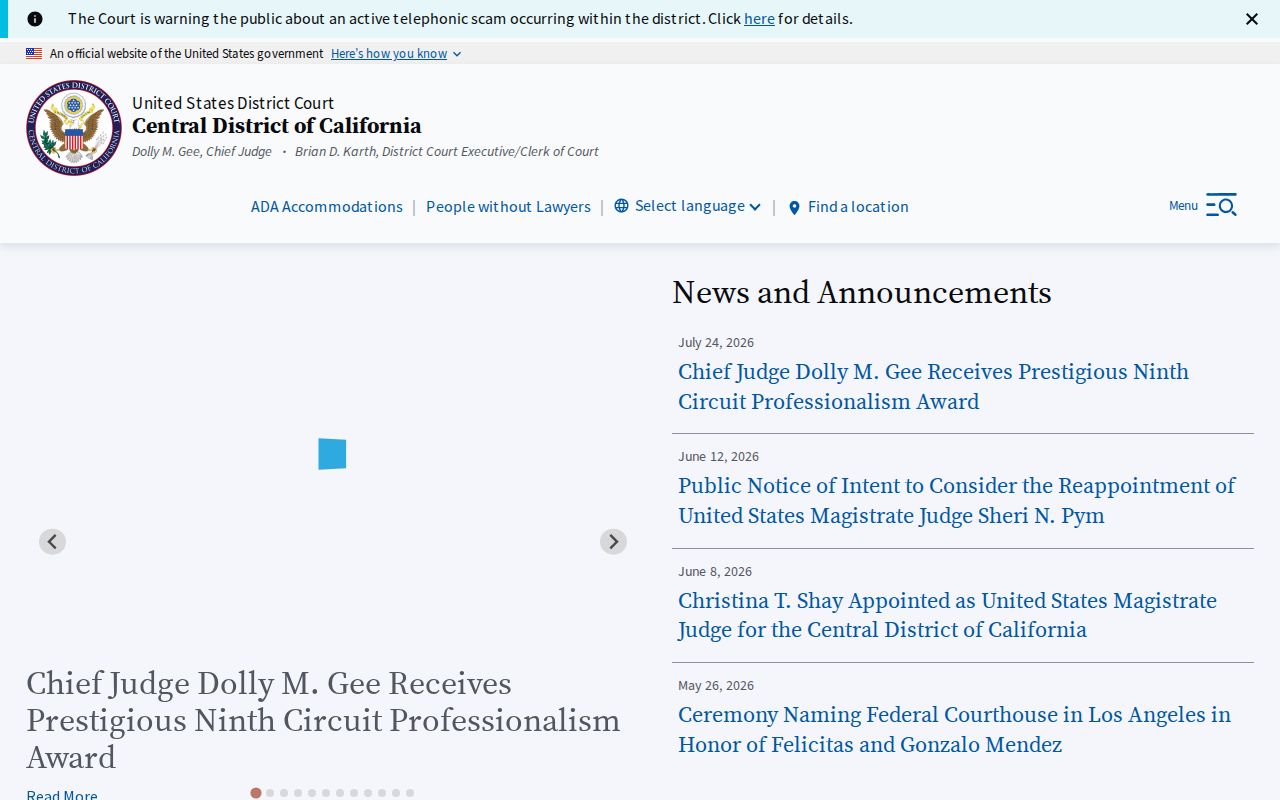
PACER can add a federal case clue, but it is not a substitute for the Riverside state-court index.
Save the Banning Lookup Case Number
A paid name search is most useful as an identification step. One name credit permits viewing up to ten cases. Court documents, when remotely accessible, cost $1 per page for the first five pages and $0.50 per later page, capped at $50 per document, with access windows set by the portal. A search result should be copied into a log before the credit is spent on another variation.
- Search the exact name with the closest case type and Banning or Riverside clue available.
- Compare caption, filing date, case type, and party role to the identity grid.
- Save the case number and return through the free known-number route.
- Read the Register of Actions for filed dates, event descriptions, and filing parties.
- Order or view only the nonconfidential documents that answer the research question.
Riverside stopped allowing third-party DOB or driver-license narrowing for criminal and traffic searches on October 11, 2024. Only the subject, with identification, may request that narrowing. Other searchers must resolve same-name results through public case detail, dates, addresses already lawfully known, and related records.
A court name hit is not proof of current residence. It is a party index result until the case facts fit.
Verify a Banning Resident License Link
Professional and business records can supply a strong public identity anchor. The California Department of Consumer Affairs search supports board or bureau, license type, license number, business name, first name, last name, registry number, city, county, status, public record, disciplinary action, and public-document filters. Published results can link to license details or board actions.
Secretary of State bizfile searches by entity name or file number. Advanced filters include entity group, status, and initial filing date. A result may show entity number, formation or registration date, status, jurisdiction, street and mailing addresses, agent for service, statement due date, and officers, directors, or managers. Recent filing PDFs may be free while an account is needed for some filings or certificates.
Use the California DCA license search for a professional route.
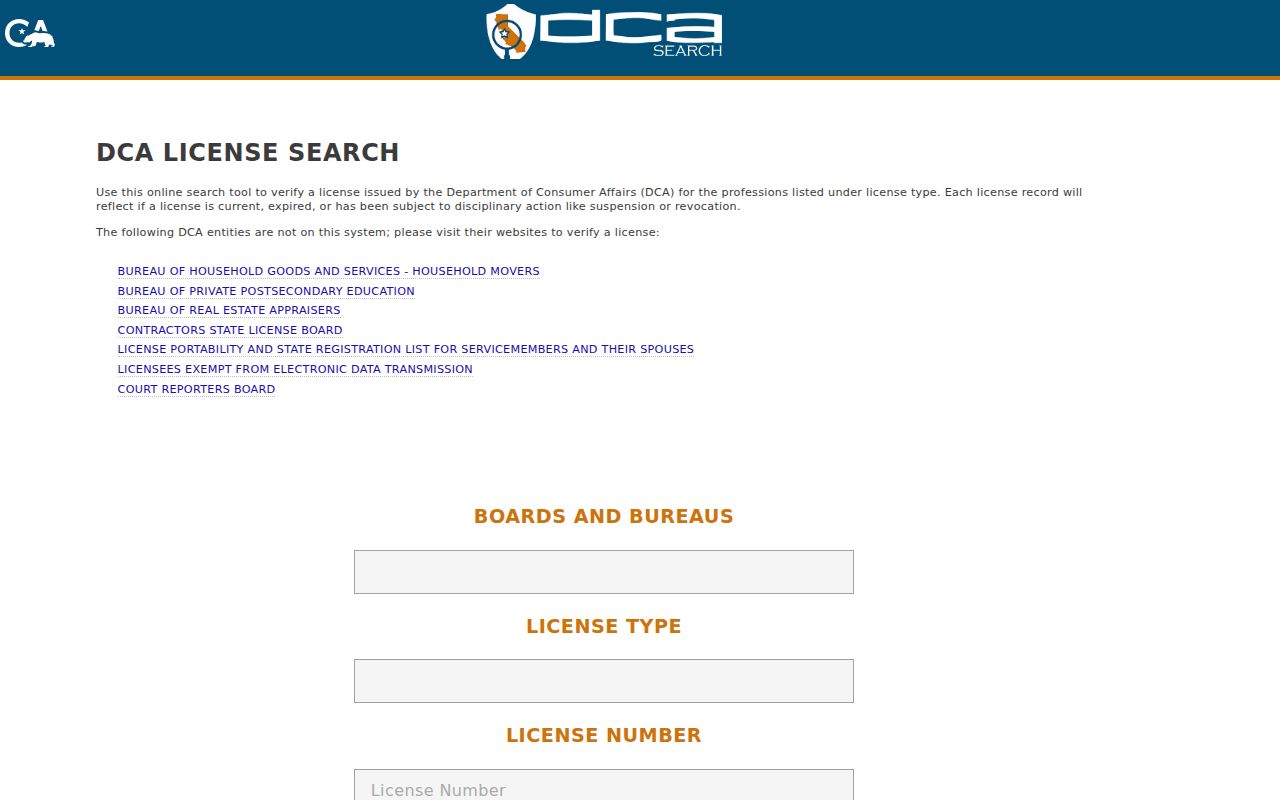
The DCA search can separate people with similar names when a board, license type, city, or status fits.
Use the California Secretary of State business search for an entity route.
Business addresses are public business or service addresses. They do not establish a private residence.
Banning Resident Lookup Vital Rules
California separates authorized and informational certified copies. An authorized birth or death copy can establish identity and is limited to people listed by statute, with a sworn statement and, for mailed requests, a notarized application in many cases. An informational copy is available to the public but is marked not valid to establish identity. Confidential marriage records are limited to a party or court order.
| Record | Route | What the application asks for | Access boundary |
|---|---|---|---|
| Birth | RUHS recent, Riverside ACR older, CDPH statewide | Subject, event date and place, parents, applicant relationship | Authorized eligibility or public informational copy |
| Death | RUHS recent, ACR older, CDPH statewide | Decedent, date and place, applicant and copy type | Authorized eligibility or informational mark |
| Public marriage | Riverside ACR or CDPH | Parties, license county, event details, applicant | Public informational route for public marriages |
| Confidential marriage | County that issued the license | Party relationship or court order | No ordinary public copy route |
Applications can require applicant contact data, subject names, event city and county, parents’ birth surnames, spouse or party names, purpose, eligibility category, signature, payment, return mailing information, and a notary block. The 2026 CDPH findings list birth at $31, death at $26, marriage at $19, and dissolution certificate at $18. Fees and forms change, so use the live California vital records route before ordering.
Banning Resident Lookup and Voter Status
California’s voter status form authenticates the voter who is checking their own record. It uses first name, last name, date of birth, and conditional driver-license or state-ID or last-four-SSN matching. A result can show registration status, party preference, county, districts, polling or vote-center information, ballot status, and election-material preferences.
- First and last name
- Required identity fields for the voter’s own status check.
- Date of birth
- Authentication input, not a public browsing field.
- Address or ZIP
- Used to match registration details and districts.
- Submit
- Returns a status result or directs the voter to Riverside Registrar help.
Elections Code sections 2187 and 2194 restrict voter information to approved political, governmental, scholarly, journalistic, and election purposes. Driver-license numbers, signatures, Social Security information, and protected addresses are withheld. A full extract requires a defined requester, purpose, geography, fields, recipients, storage plan, certification, and signature. It is not a Banning street directory.
Use California’s registration-status route or call Riverside Registrar at 951-486-7200 for the lawful route.
Banning Resident Lookup for Heirs and Classmates
Different personal goals call for different official trails. Probate petitions, notices, deeds, and court registers can identify an heir or estate relationship. A birth-parent search should use California’s official adoption-information and consent process through CDSS, CDPH, or the court rather than trying to infer a family connection from public scraps. Former classmates may be approached through yearbooks, newspapers, alumni groups, or community organizations. A business owner can be checked through SOS filings and Riverside FBN records.
The State Controller’s unclaimed-property search is a useful historical association check. Search surname or business name, refine by first name and location, and save the reporting business and property identifier. A match can support a past locality clue. Claim review requires proof, and the result is not a current-address record.
The free name search is at California Unclaimed Property.
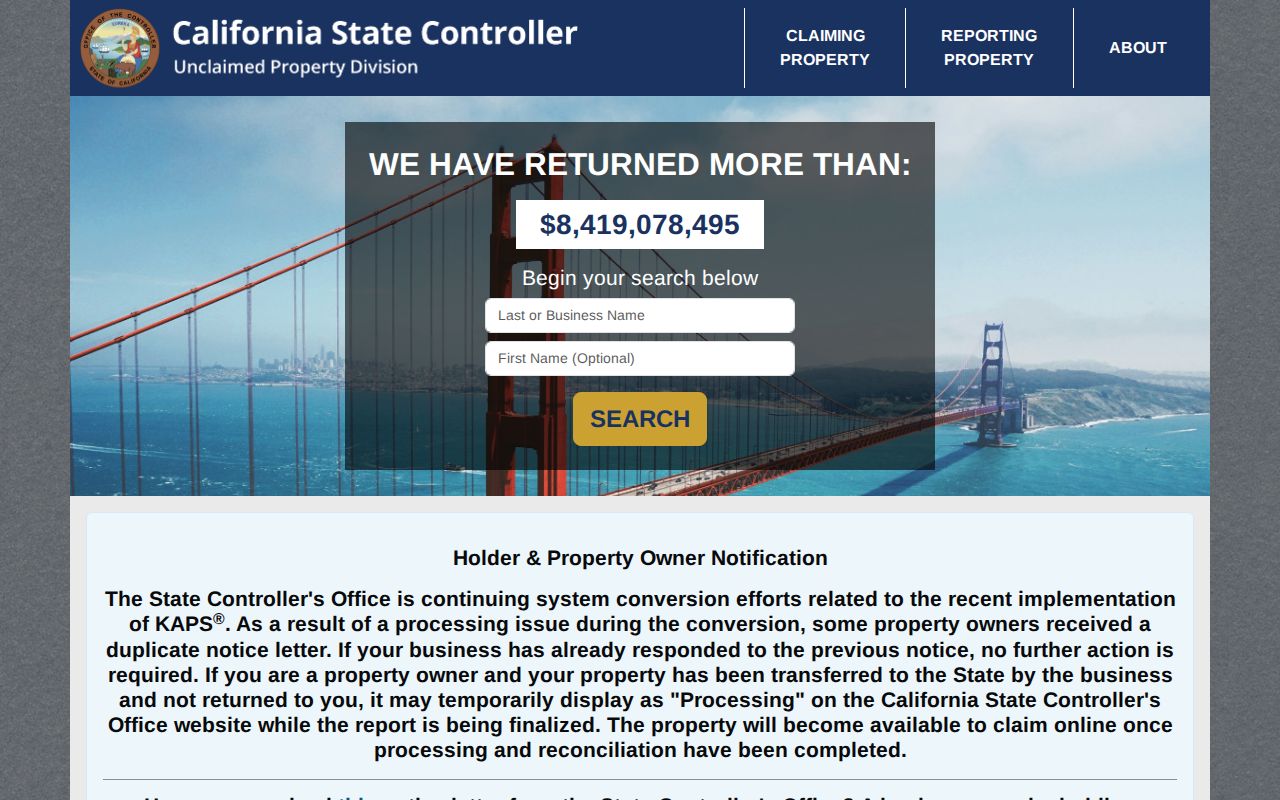
Unclaimed property is most helpful when paired with a deed, directory, obituary, or known family event.
Banning Resident Lookup State Clues
State and county systems can confirm a defined public status without becoming a general person directory. The Riverside Sheriff inmate system is a current custody lookup. California CDCR’s CIRIS searches by last name and optional first name or CDCR number. California DOJ’s Megan’s Law site provides a name or map search with display rules tied to statutory categories. A no-result does not prove that no person exists because timing, eligibility, and display rules vary.
Use the official California incarcerated-person search when the research question is custody status.
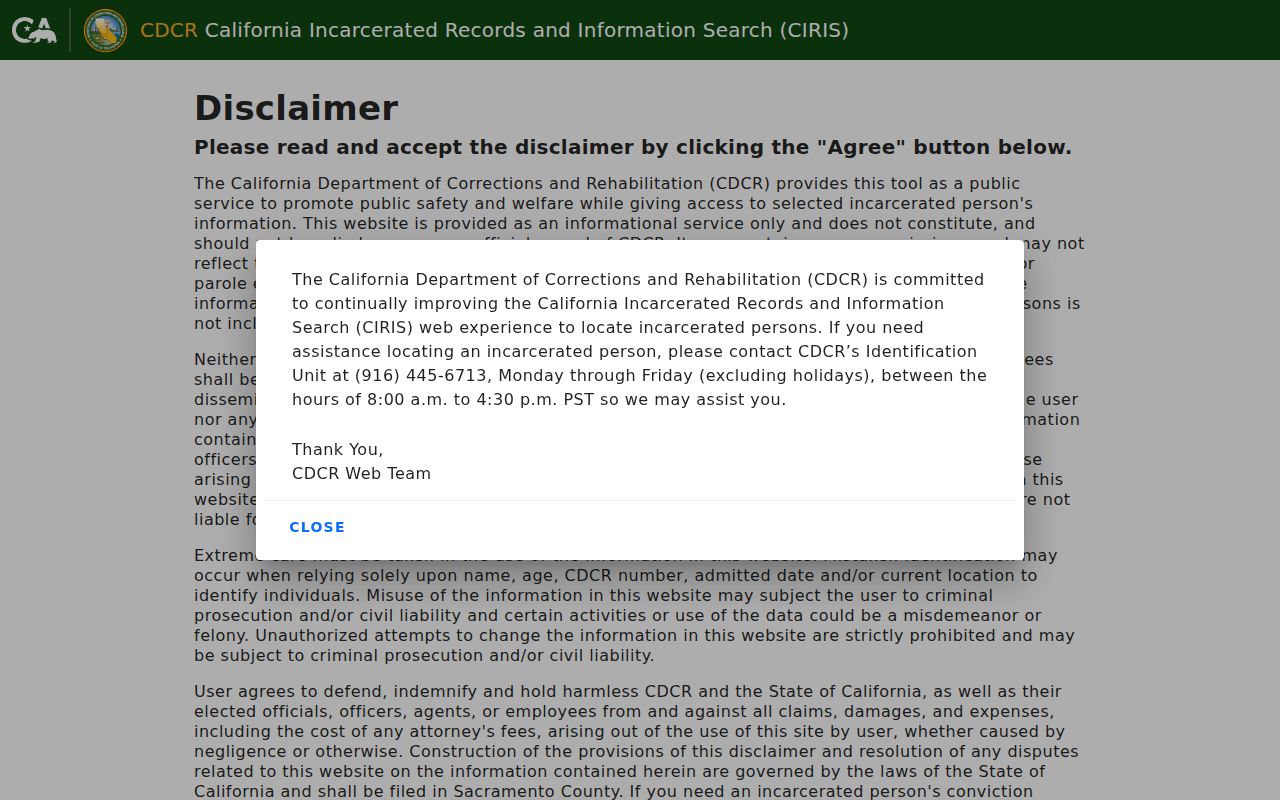
CIRIS is a custody locator with published fields such as name, CDCR number, age, location, commitment county, admission date, and parole-hearing information where displayed.
Use the California DOJ Megan’s Law search only for its stated public registry purpose.
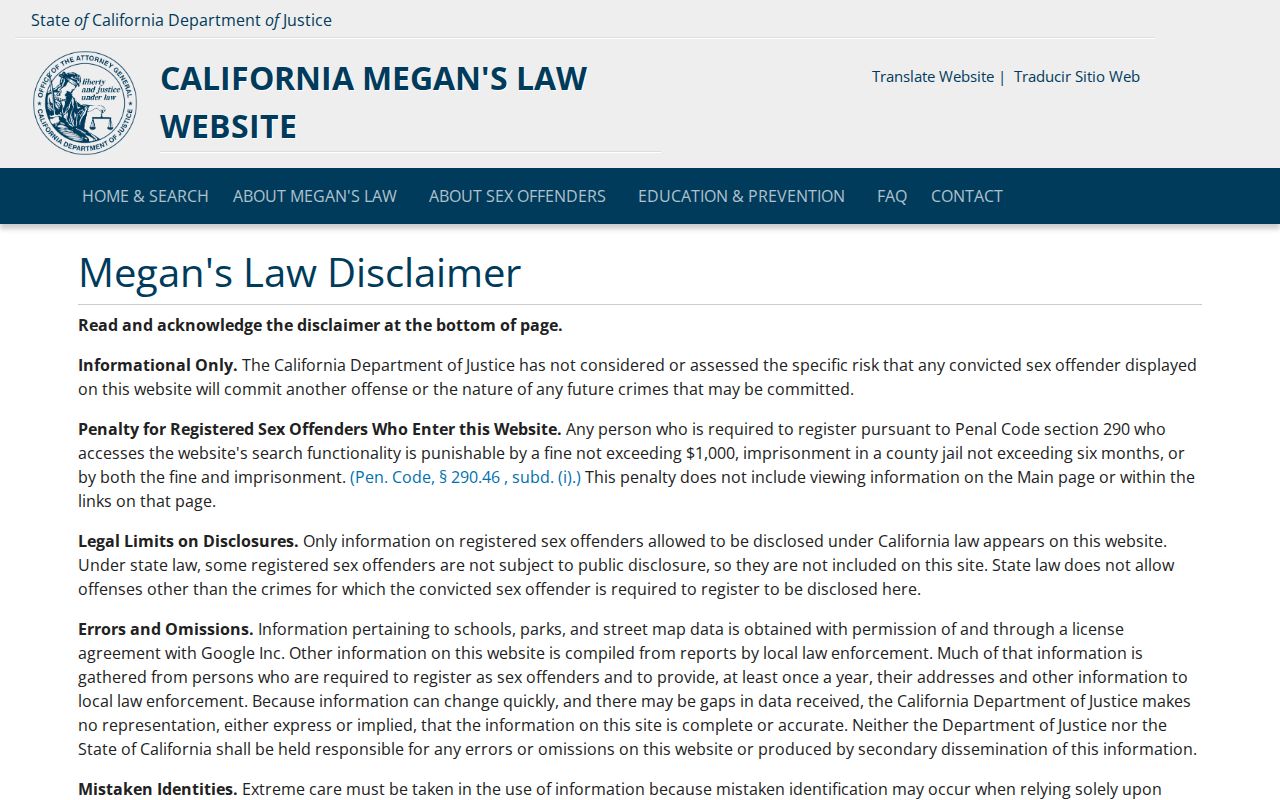
Registry display varies by tier and statute. It should never be converted into a private investigation or a conclusion about a nonmatching person.
Privacy in a Banning Resident Lookup
Some absent address results are deliberate. California Safe at Home supplies a substitute mailing address to eligible survivors and certain public officials, while the actual address remains protected within the program. Recorded documents can have separate redaction rules. Voter files also provide special handling for protected addresses. A responsible Banning resident lookup records the gap without trying to reconstruct a confidential location.
California’s Delete Request and Opt-out Platform, operated through the state privacy system, directs registered data brokers to delete or stop selling personal information. It does not erase deeds, assessments, court filings, or city records. Commercial opt-out routes should be handled with the minimum identity needed, confirmation saved, and source corrections sent to the custodian that made the record.
The data-broker registry is at California Privacy Protection Agency registry.
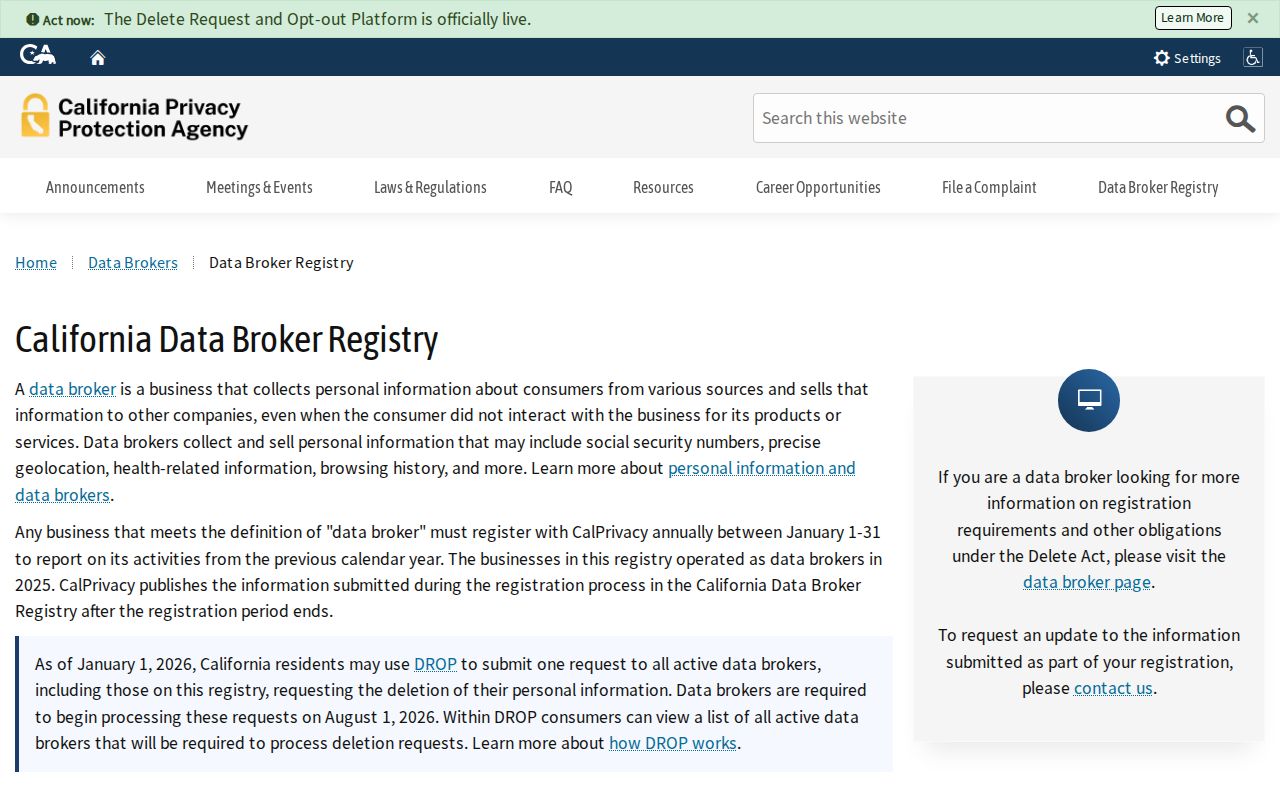
The registry helps identify a covered commercial source. It does not change an official county record.
The centralized deletion route is described at California DROP.
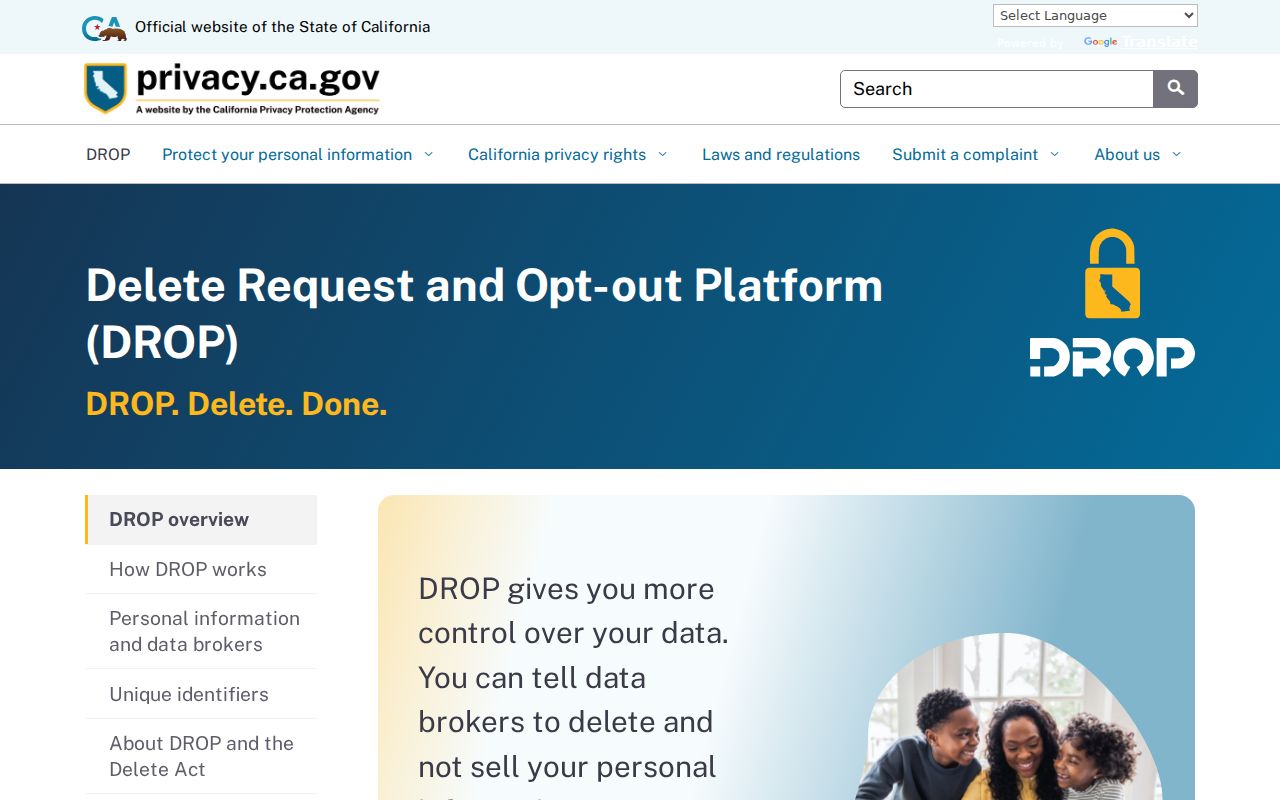
DROP is a direction to registered data brokers, not a way to remove an accurate Banning deed, parcel, or court file.
Correct a Banning Resident Lookup Record
Correction depends on the keeper. Assessment ownership or mailing questions belong with Riverside ACR. A city parcel association belongs with Banning Community Development or SmartGov support. Court index and document concerns belong with the Riverside clerk or a legal correction or sealing process. Vital amendments go to Riverside or CDPH. License and business filing errors go to the responsible board or Secretary of State.
Keep a correction packet small and precise: the record number, the exact field, the reason it is wrong, the supporting source, and a safe contact route. Do not ask an unrelated office to rewrite another custodian’s data. For a city record, the CPRA can request an existing file, but it does not force the city to create a custom person list.
Lawful personal use. A Banning resident lookup can support family history, reconnecting, property research, or personal safety awareness. Do not use a name, address, court, voter, or registry result to stalk, harass, threaten, or harm anyone.
Identity-theft recovery and reporting routes are available through IdentityTheft.gov.
Use an independently sourced agency route when a lookup reveals a suspected identity-theft problem.
Fraud reports can also be submitted through the Federal Trade Commission fraud report.
Reporting a scam is a safety response, not a reason to publish a private person list.
Write down negative searches too. Record the portal, spelling, date window, and cutoff. “Not found in this portal and coverage” is accurate. “No record exists” is usually more than the search proves.